
 Azerbaijan
 Kazakhstan
 Kyrgyzstan
 Turkmenistan
 Northern Cyprus
 Türkiye
 Tatarstan
 Bashkortostan
 Sakha (Yakutia)
 Gagauzia
 North Macedonia
 Bulgaria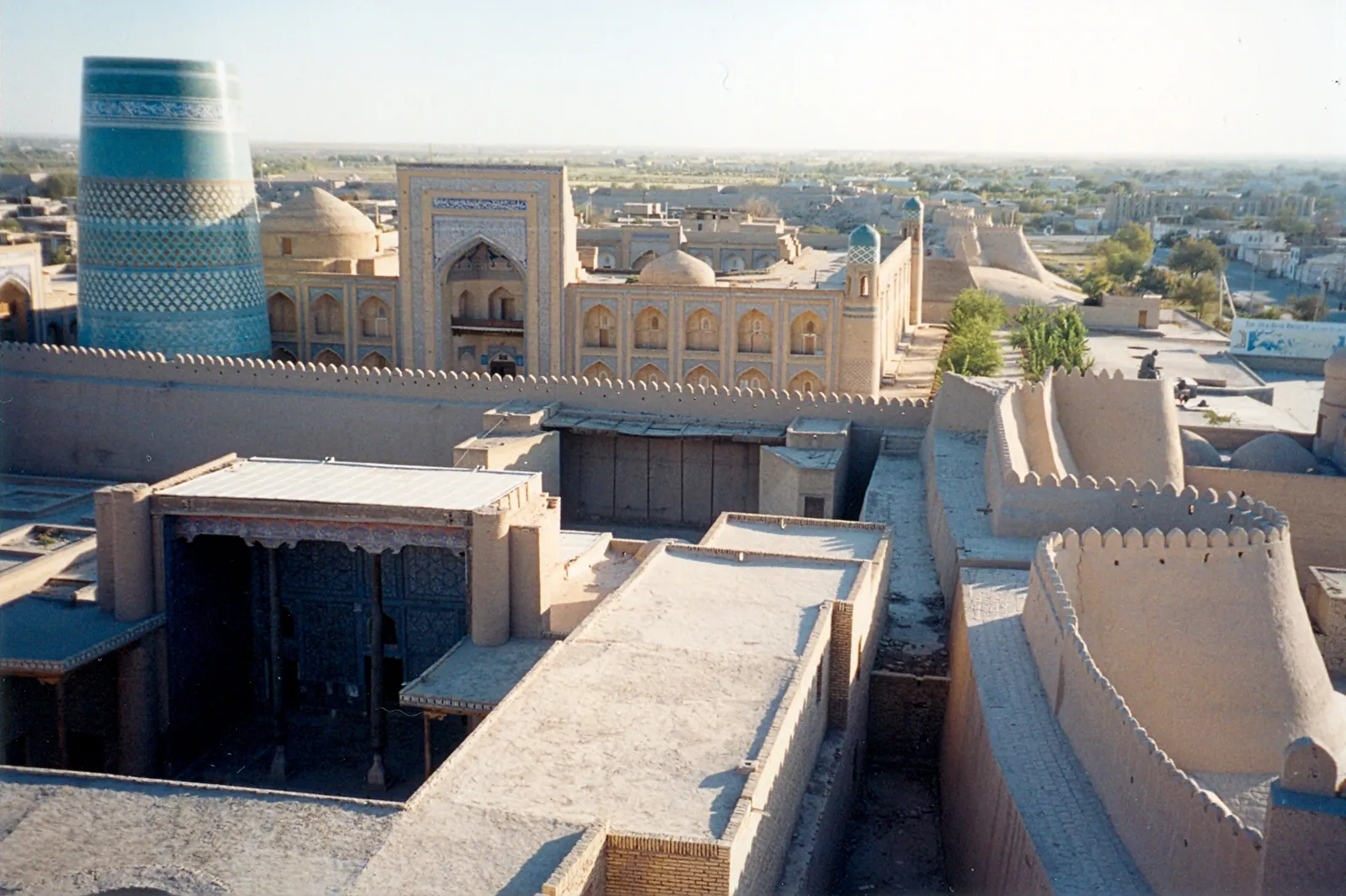
Itchan Kala
UNESCOItchan Kala is the walled inner town of Khiva, one of the best-preserved medieval urban ensembles in Central Asia. Madrasahs, mosques, mausoleums and mud-brick walls surround streets where people still live and work.
History
Itchan Kala is the walled inner town of Khiva, Uzbekistan. Traditionally Khiva was divided into two parts: the inner city, Itchan Kala, and the outer city, Dishan Kala. Archaeological evidence suggests that Khiva existed by the 5th–6th centuries as a stopping place near the Khayvak well on the route between Merv and Gurganj, and parts of the wall foundations may go back to that time. In 1598, after the Amu Darya shifted its course and left the old Khorezmian capital Gurganj without water, the capital moved to Khiva.
Most of what you see today dates from the 18th and 19th centuries, especially the period of the Qungrat dynasty, although some elements are older. Itchan Kala has been a UNESCO World Heritage Site since 1990.
What to see
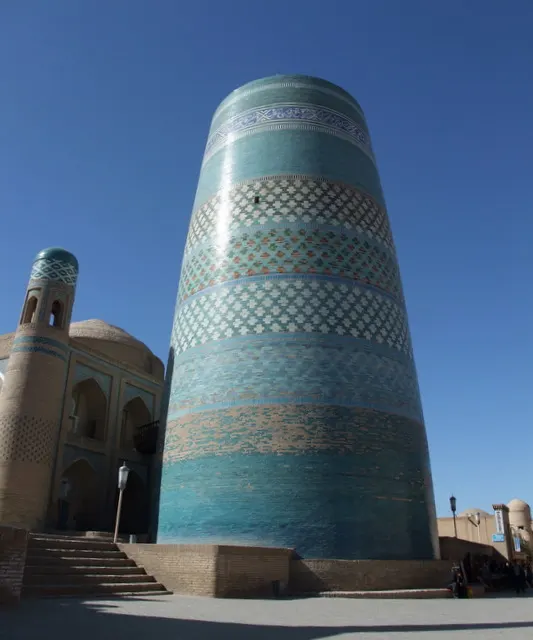
The mud-brick walls are roughly 8–10 metres high and are pierced by four gates: Bogcha (north), Polvon (east), Tosh (south) and Ota (west). Most visitors enter through the western Ota Gate. Close by are the Konya Ark, the old fortress of the khans, the Muhammad Aminkhan Madrasah and the unfinished Kalta Minor minaret, known for its turquoise tilework.
Further in, the Juma Mosque is notable for its hall of wooden columns, some of them reused from older buildings. Also worth seeking out are the Tosh Hovli Palace, the Alla-Kulli-Khan Madrasah, and the mausoleums of Pahlavon Mahmoud and Sayid Allavuddin. The area is compact, so everything can be reached on foot, and the Ak Mosque, caravanserais and markets are all worth a look.
Visiting tips
Itchan Kala is small and walkable, but allow at least half a day, and ideally stay a night to see it in the quieter morning and evening hours. Summers can be very hot, so bring water and sun protection; early and late light is also best for photography.
Some buildings operate as museums, while others house workshops or shops. Check ticket arrangements and opening times before you go. This is a living neighbourhood with homes, a bazaar and craft workshops, so be considerate in the streets and dress modestly when entering religious buildings.
Map
Places to see
Latest news
- Uzbekistan and World Bank discuss attracting investment
- Uzbekistan and IFC discuss transport and energy projects
- Uzbekistan to Create Full Cost Coverage System for Childhood Cancer Treatment
- Uzbekistan and EBRD discuss privatization and support for business
- Uzbekistan and Malaysia agree to train semiconductor workforce
- Mirziyoyev Discusses New Power Plants and Fuel Supplies With Foreign Investors