
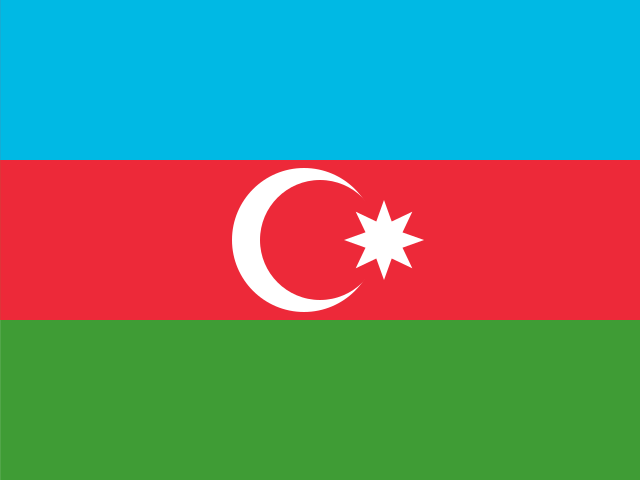
 Azerbaijan
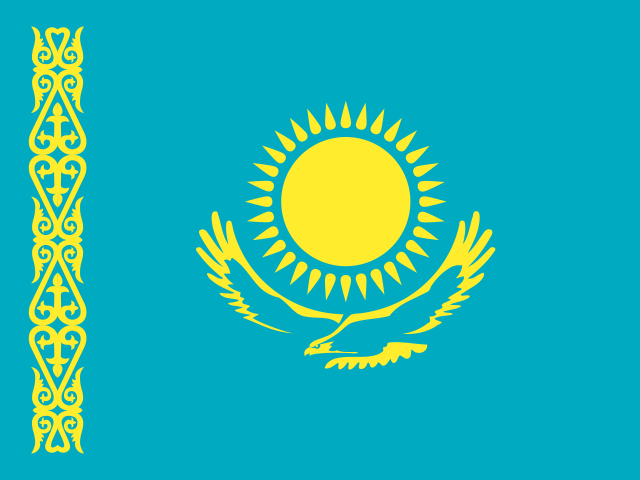 Kazakhstan
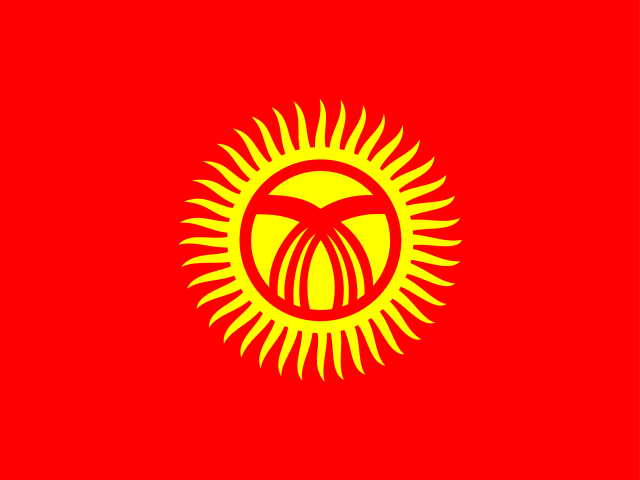 Kyrgyzstan
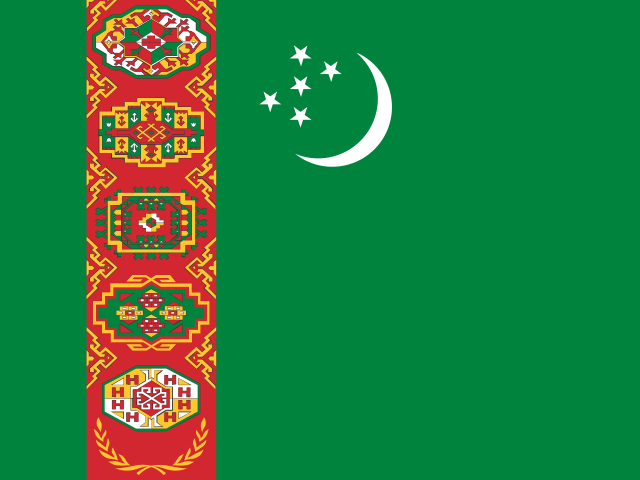 Turkmenistan
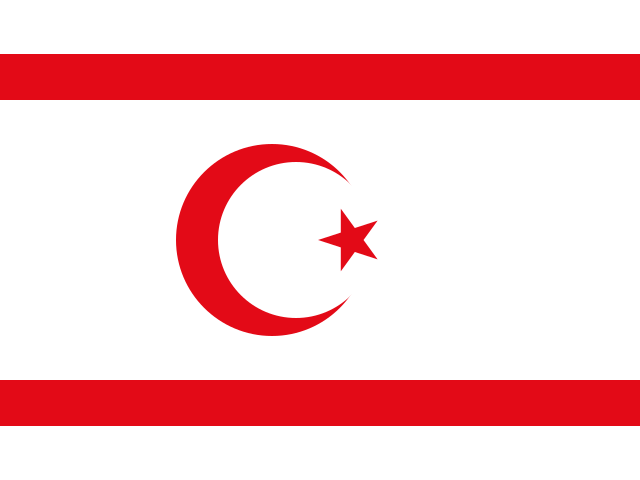 Northern Cyprus
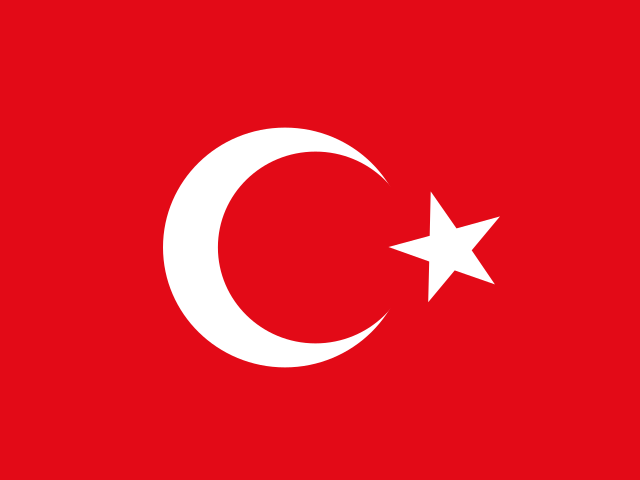 Türkiye
 Tatarstan
 Bashkortostan
 Sakha (Yakutia)
 Gagauzia
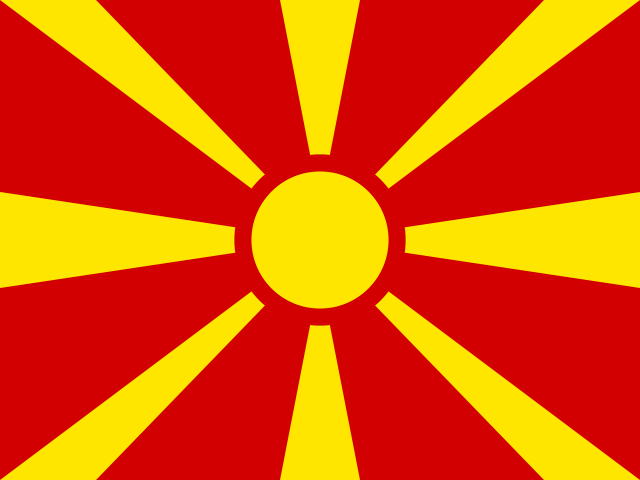 North Macedonia
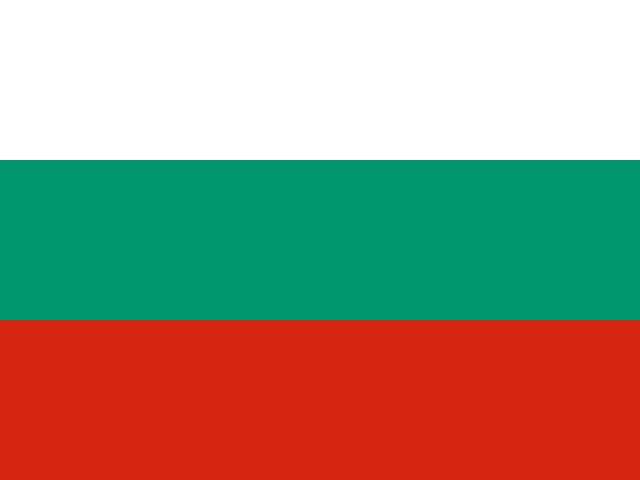 Bulgaria
Khiva
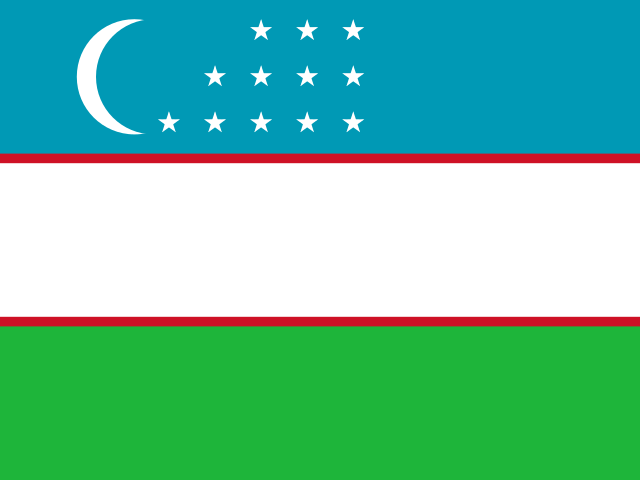
Khiva is a walled desert-edge city in Uzbekistan's Khorazm Region, where brick ramparts, madrasas and minarets sit close together. Walking through Itchan Kala feels like stepping into a well-preserved stop on the Silk Road.
Why visit
Khiva is a district-level city in Khorazm Region, thought to be around 2,500 years old. It became the capital of the Khanate of Khiva in the early 17th century and stayed a regional centre until 1924, when it was incorporated into the Uzbek Soviet Socialist Republic.
Its heart, Itchan Kala, was the first site in Uzbekistan and Central Asia to be inscribed on the UNESCO World Heritage List, in 1991. Madrasas, mosques, minarets and palaces are packed into a small area, so it is easy to explore on foot; most surviving buildings date from the 18th and 19th centuries. For anyone interested in the Turkic world, this is also the land where Khorezm gradually became Turkic-speaking after the 10th century.
How many days
One full day is enough to see Itchan Kala properly, and staying a night lets you see the walls and lanes in evening light and in the quiet of early morning.
If you want to add day trips, plan two or three days. Khiva is often part of a route with Bukhara and Samarkand, so allow for travel time between them.
Top sights
Itchan Kala is called a city within a city. Its brick walls rise about 10 metres, with gates on four sides; the present walls date to the late 17th century, though foundations are believed to go back to the 10th century. The main monuments line the road between the western and eastern gates.
Kalta Minor, the stubby tower covered in blue glazed tiles, was begun in 1851 by Mohammed Amin Khan; he died and it was never finished, hence the name meaning short. The Djuma Mosque has a hypostyle hall with 112 columns and was rebuilt in 1788-89. Sherghazi Khan Madrasah is among the oldest buildings in Itchan Kala, and the Ak Sheikh Bobo observation tower gives views over the city. Check access conditions before you go.
Where to stay (neighbourhoods)
The most atmospheric choice is a small guesthouse inside or just outside the walls of Itchan Kala; the city has many private guesthouses. Staying inside lets you walk the lanes early and late, when day visitors are fewer.
The outer town, Dichan Kala, is quieter and closer to everyday local life, and can be practical for the bazaar and transport. Check availability and location in advance.
Getting there and around
The nearest airport is Urgench International Airport. A trolleybus line has linked Urgench and Khiva since 1997, and a commuter train connects the airport with Khiva. Check current schedules before you go.
Khiva has its own railway station, served by the Jaloliddin Manguberdi express from Tashkent. Buses and minibuses connect Khiva with Tashkent, Bukhara, Navoi, Samarkand and Urgench. Inside Itchan Kala, you walk.
What to eat
Khorazm cooking belongs to the wider Uzbek table: plov, manti, soups and fresh bread are typical things to look for. A tea stop is part of any bazaar visit.
Carpet weaving is among the region's known crafts, so markets are pleasant to browse. Seasonal dishes vary, so ask locally for recommendations.
Best time to visit
Khorazm has a desert-like climate, and summer heat can be intense. Spring and autumn are usually more comfortable for walking the walls and spending long days outdoors.
Winter can be cold, though crowds are thinner. Check the weather forecast before you go.
Day trips
Khiva sits within the Khorazm oasis, so you can reach Urgench and smaller towns such as Hazorasp by the regional bus and minibus network.
If you want to see desert fortresses, ask local guides about tour options; check prices and schedules before you go.
Map
Places to see
 UNESCO
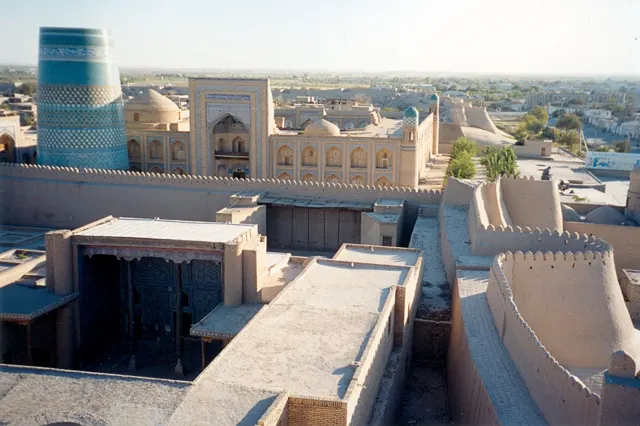
Itchan KalaItchan Kala is the walled inner town of Khiva, one of the best-preserved medieval urban ensembles in Central Asia. Madrasahs, mosques, mausoleums and mud-brick walls surround streets where people still live and work.
UNESCO
Itchan KalaItchan Kala is the walled inner town of Khiva, one of the best-preserved medieval urban ensembles in Central Asia. Madrasahs, mosques, mausoleums and mud-brick walls surround streets where people still live and work.
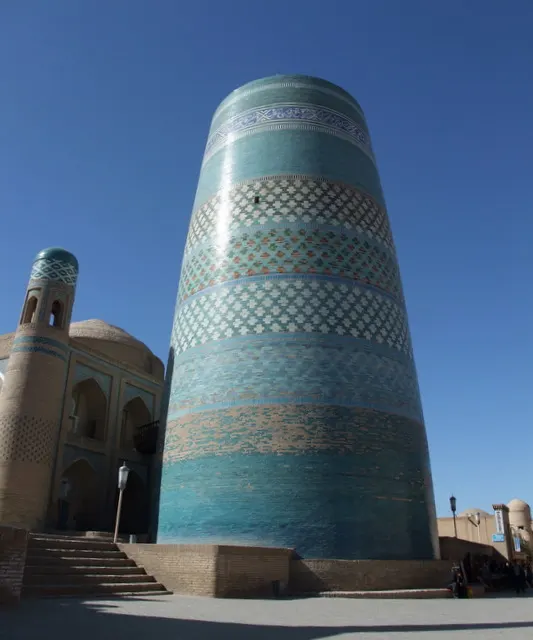 Kalta MinorInside the walls of Khiva's Itchan Kala stands a squat minaret clad in turquoise glazed tile, famous precisely because it was never finished. Its stubby bulk tells the story of a khan's unrealised ambition.
Latest news
- Uzbekistan and World Bank discuss attracting investment
- Uzbekistan and IFC discuss transport and energy projects
- Uzbekistan to Create Full Cost Coverage System for Childhood Cancer Treatment
- Uzbekistan and EBRD discuss privatization and support for business
- Uzbekistan and Malaysia agree to train semiconductor workforce
- Mirziyoyev Discusses New Power Plants and Fuel Supplies With Foreign Investors