
 Azerbaijan
 Kazakhstan
 Kyrgyzstan
 Turkmenistan
 Northern Cyprus
 Türkiye
 Tatarstan
 Bashkortostan
 Sakha (Yakutia)
 Gagauzia
 North Macedonia
 Bulgaria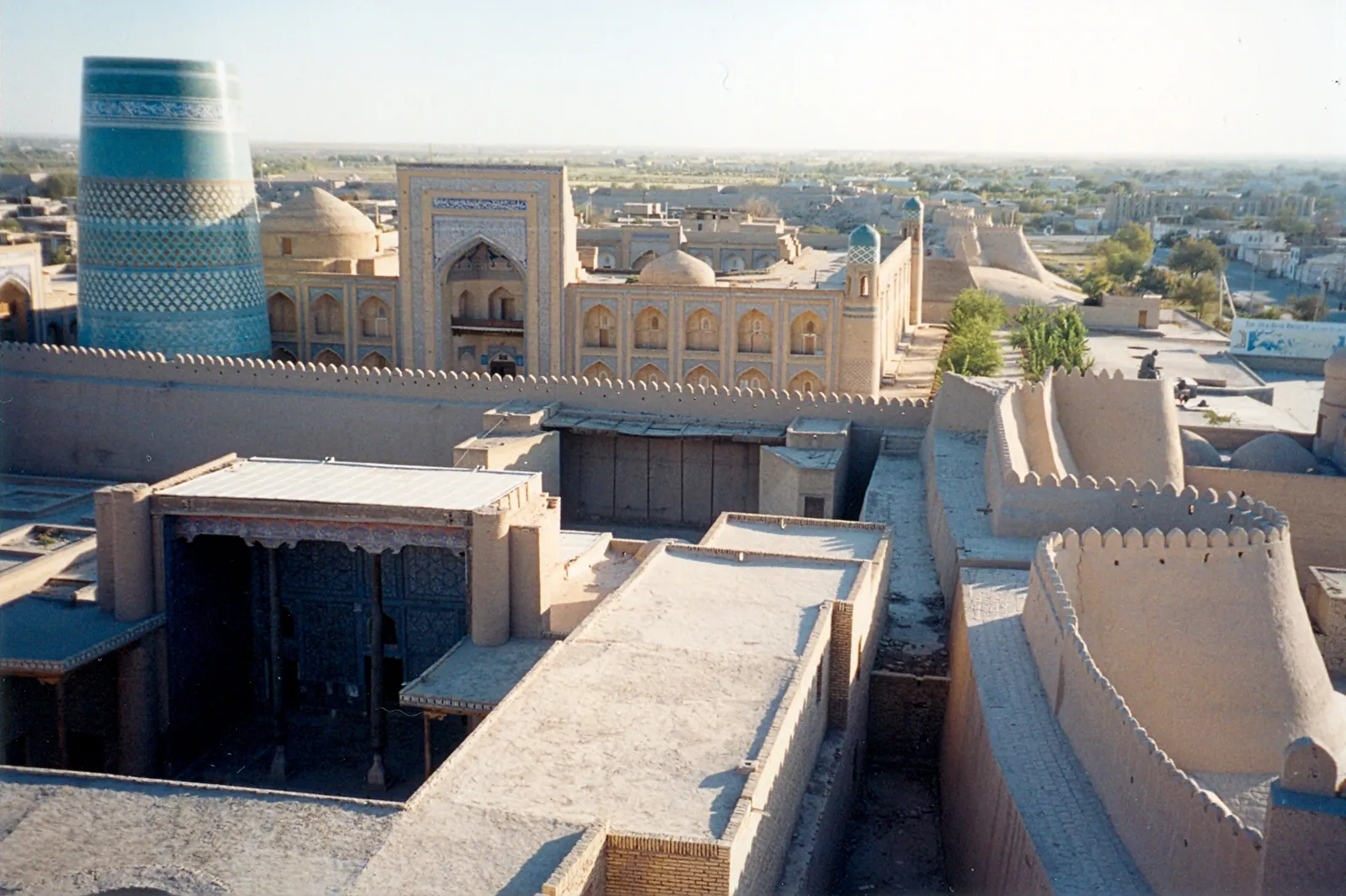
Uzbekistan
Uzbekistan is home to the Silk Road cities of Samarkand, Bukhara and Khiva, with their blue-tiled domes and old madrasas. It is a place where the history of the Turkic world is visible in the streets, markets and tables.
- Capital
- Tashkent
- Currency
- Uzbek som (UZS)
- Official language
- Uzbek (plus Karakalpak in Karakalpakstan)
- Common lingua franca
- Russian
- Time zone
- UTC+5
- Plug type & voltage
- C, F · 220 V, 50 Hz
- Emergency number
- 112 (also 101, 102, 103)
- Dialling code
- +998
- Driving side
- Right
Overview
Uzbekistan lies in the heart of Central Asia, bordered by Kazakhstan, Kyrgyzstan, Tajikistan, Afghanistan and Turkmenistan. It is one of only two doubly landlocked countries in the world, along with Liechtenstein, and with more than 39 million people it is the most populous country in Central Asia. The capital is Tashkent.
The Silk Road cities of Samarkand, Bukhara and Khiva form the historic core of any trip. Samarkand was the capital of Timur and a centre of science under Ulugh Beg. Shahrisabz is Timur's birthplace, and the Fergana Valley lies in the east. Uzbek is the official language and Russian remains a common lingua franca. Tajik is also spoken, particularly around Samarkand and Bukhara.
When to go
The climate is sharply continental, with very hot summers and cold winters. Spring (April-May) and autumn (September-October) are generally the most comfortable seasons for visiting the historic cities. In July and August the heat can make sightseeing hard, especially in the south and in desert-edge cities such as Bukhara and Khiva.
Winters are cold, particularly in the north, though crowds are thinner. If you want to catch a holiday or local festival, check the calendar before you book.
Getting around
High-speed trains are one of the most practical ways to travel between cities such as Tashkent, Samarkand and Bukhara. Other places, such as Khiva, are reached by different rail lines or by road. Check routes and ticket rules before you go, and book early in busy seasons.
Domestic flights, intercity taxis and shared cars are also used. The Tashkent metro is useful and some of its stations are worth a look in their own right. In cities, taxis and ride-hailing apps are common; agree on the fare or check the app before you set off.
Money and payments
The currency is the Uzbek som (UZS), which became fully convertible at market rates in 2017. Card payments are increasingly accepted in larger cities, but cash is still useful at small businesses, markets and in rural areas.
Exchange money at banks or official exchange offices and check current rates and card conditions before you travel. ATMs are available, but it is wise to carry a backup way to pay.
Food
Plov, rice cooked with meat, carrots and onion in a large pot, is the best-known dish and varies from region to region. You will also meet samsa, manti, lagman, shurpa and shashlik.
Bread (non) is central to the table, and each city has its own style. Tea is offered almost everywhere. In summer, melons and watermelons, dried fruit and nuts fill the markets, and a stroll through a bazaar is a good introduction to the cuisine.
Etiquette and safety
Uzbeks are known for hospitality. Greetings matter, and a hand on the heart is a warm gesture. Shoes are removed when entering homes. Dress modestly at mosques and shrines and follow local rules. Ask before photographing people, and note that photography may be restricted at some military or official sites.
The country is generally considered safe for visitors, but keep an eye on your belongings in crowds. Check current official travel advice, especially for border areas. Travel insurance is recommended, and bottled water is a safer choice than tap water.
Map
Cities
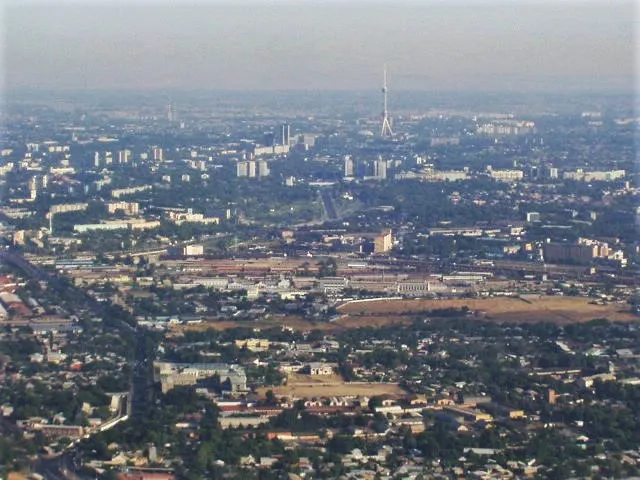 TashkentTashkent, the capital of Uzbekistan and the most populous city in Central Asia, brings together Silk Road heritage, Soviet-era architecture and lively bazaars. It is a place where Timur's legacy, wide boulevards, tea houses and ornate metro stations sit side by side.
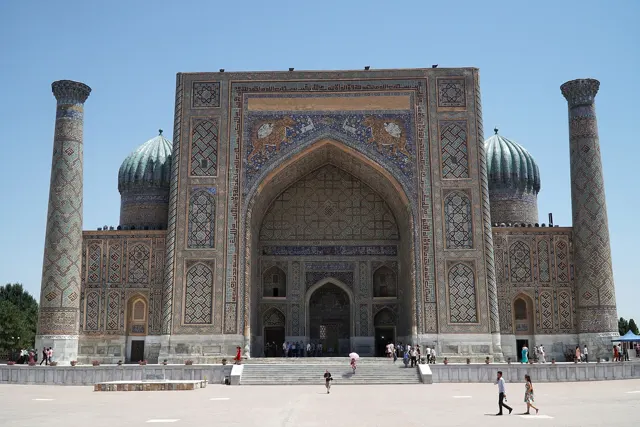 SamarkandSamarkand is one of the Silk Road's best-known cities and was the capital of Timur, famed for monuments covered in cobalt and turquoise tilework. It rewards anyone curious about Central Asian history and the Turkic world with some of Uzbekistan's most memorable architecture.
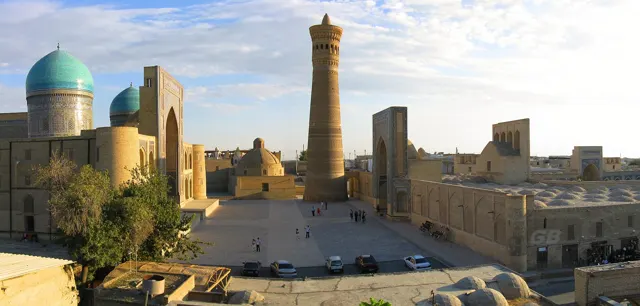 BukharaBukhara is an Uzbek city with some 2,500 years of recorded history on the Silk Road, and its historic centre is a UNESCO World Heritage Site. Minarets, madrasas, trading domes and teahouses by the pool make it an easy and rewarding city to explore on foot.
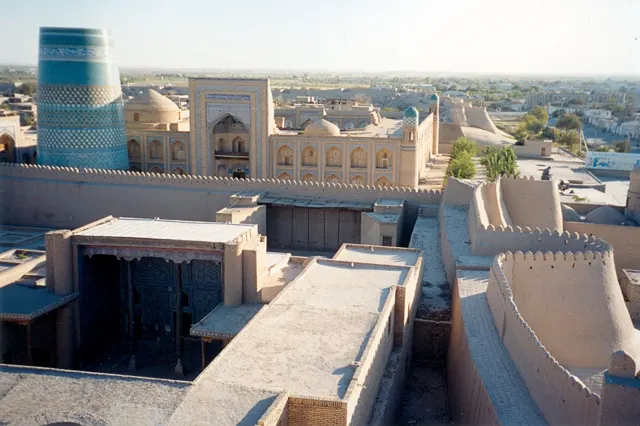
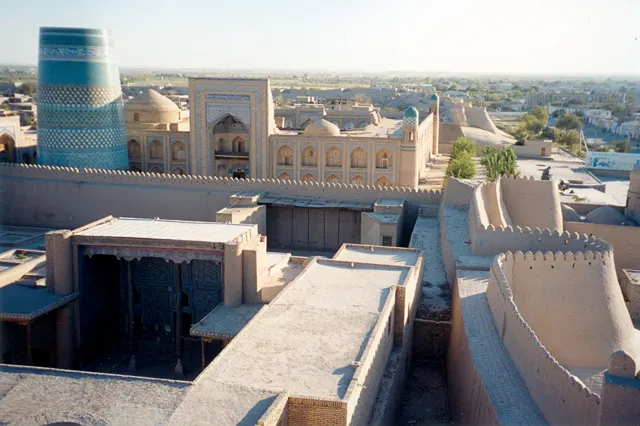 KhivaKhiva is a walled desert-edge city in Uzbekistan's Khorazm Region, where brick ramparts, madrasas and minarets sit close together. Walking through Itchan Kala feels like stepping into a well-preserved stop on the Silk Road.
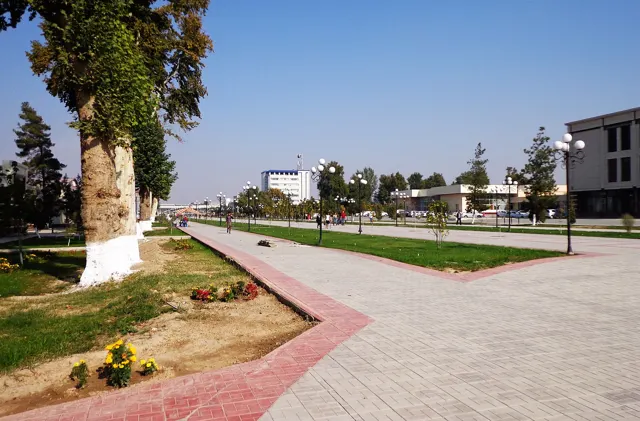 FerganaFergana is a calm Uzbek city of wide tree-lined boulevards and Russian-era buildings, with a character quite different from the rest of the Fergana Valley. It makes an easy base for reaching the valley's craft towns such as Margilan and Rishtan.
 UNESCO
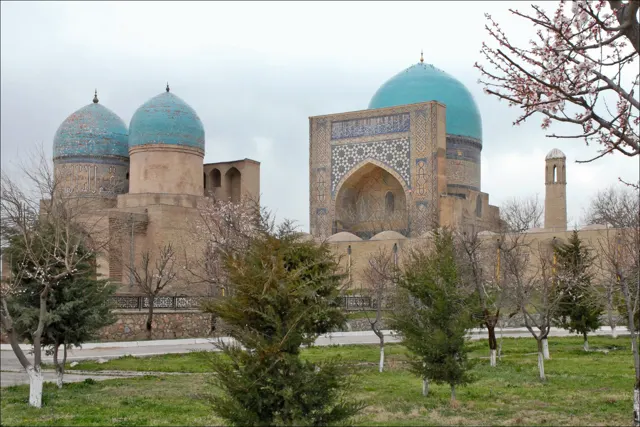
ShahrisabzShahrisabz, the birthplace of Timur, is one of Central Asia's oldest cities, with a history stretching back more than 2,700 years. It is an easy and rewarding trip from Samarkand if you want to see the towering remains of Ak-Saray and other Timurid monuments.
UNESCO
ShahrisabzShahrisabz, the birthplace of Timur, is one of Central Asia's oldest cities, with a history stretching back more than 2,700 years. It is an easy and rewarding trip from Samarkand if you want to see the towering remains of Ak-Saray and other Timurid monuments.
Places to see
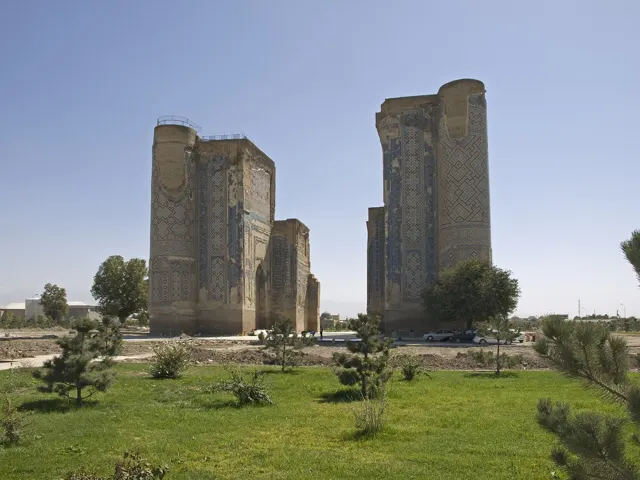 Ak-Saray PalaceIn Timur's birthplace, Shahrisabz, two enormous surviving gate towers still hint at what was once among the grandest palace entrances in Central Asia. The ruins sit in a small park, making it easy to picture the Timurid era on the spot.
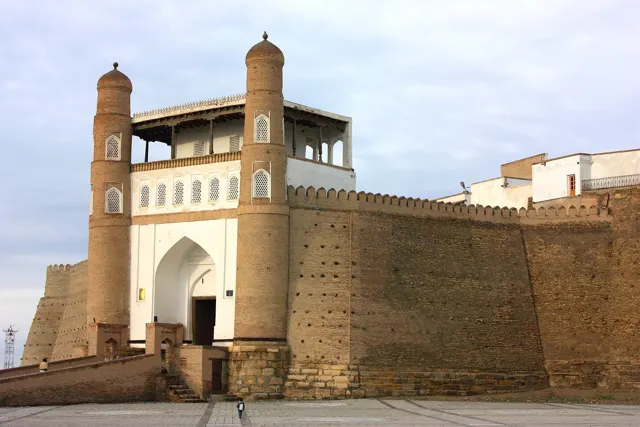 Ark of BukharaRising nearly twenty metres above the plain in the north-west of Bukhara, the Ark is among the oldest parts of the city. Inside its walls you can combine museums, restored palace spaces and centuries of dynastic history in a single visit.
 UNESCO
Itchan KalaItchan Kala is the walled inner town of Khiva, one of the best-preserved medieval urban ensembles in Central Asia. Madrasahs, mosques, mausoleums and mud-brick walls surround streets where people still live and work.
UNESCO
Itchan KalaItchan Kala is the walled inner town of Khiva, one of the best-preserved medieval urban ensembles in Central Asia. Madrasahs, mosques, mausoleums and mud-brick walls surround streets where people still live and work.
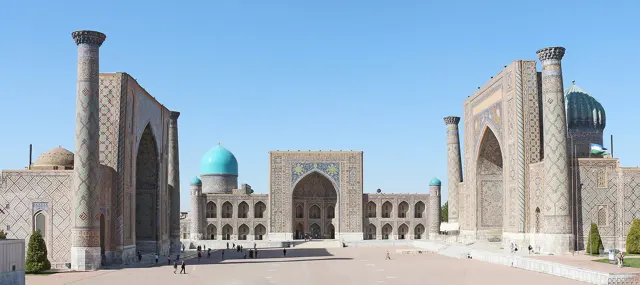 RegistanIn the heart of Samarkand, three grand madrasas with turquoise domes and richly tiled façades face a historic square. Registan is one of the finest ensembles of Islamic architecture in Central Asia, with centuries of Timurid and later history written into its walls.
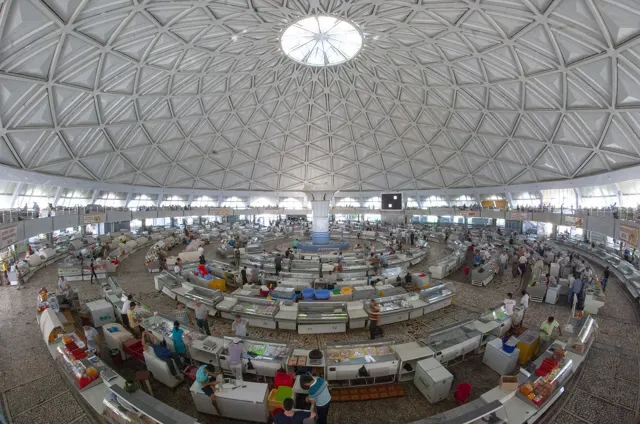 Chorsu BazaarUnder its blue dome in the heart of Tashkent's old town, Chorsu Bazaar is a lively market where everything from vegetables to spices, nuts and bread is sold. It is a good stop for anyone who wants to see everyday city life and a distinctive piece of late Soviet modernist architecture.
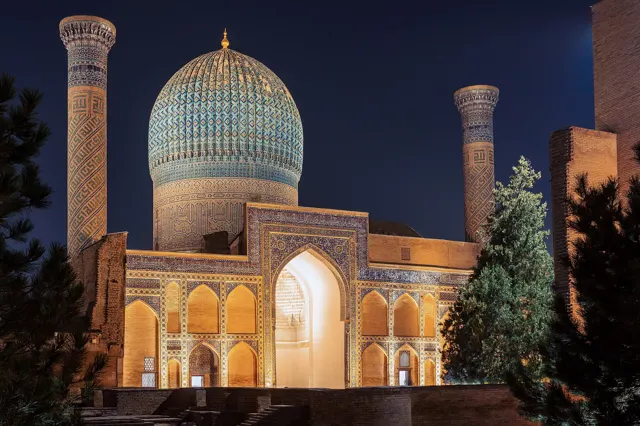 Gur-e AmirGur-e Amir in Samarkand is the mausoleum of Timur and several members of his dynasty, recognisable by its ribbed turquoise-blue dome. It is a compact visit that shows the roots of the architecture later seen in the Mughal tombs of India.
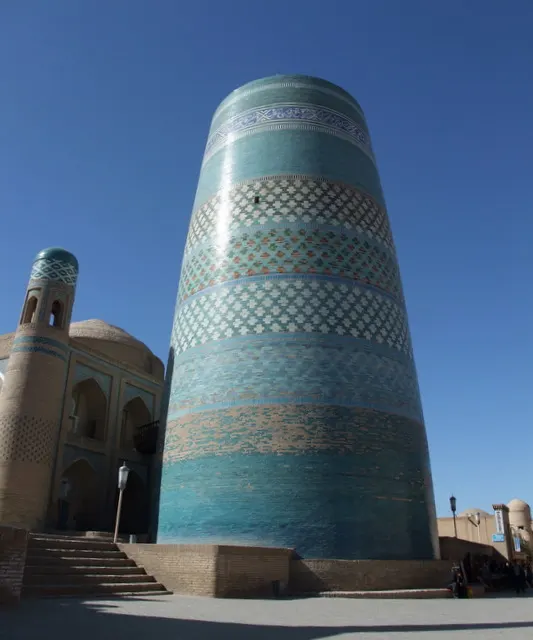 Kalta MinorInside the walls of Khiva's Itchan Kala stands a squat minaret clad in turquoise glazed tile, famous precisely because it was never finished. Its stubby bulk tells the story of a khan's unrealised ambition.
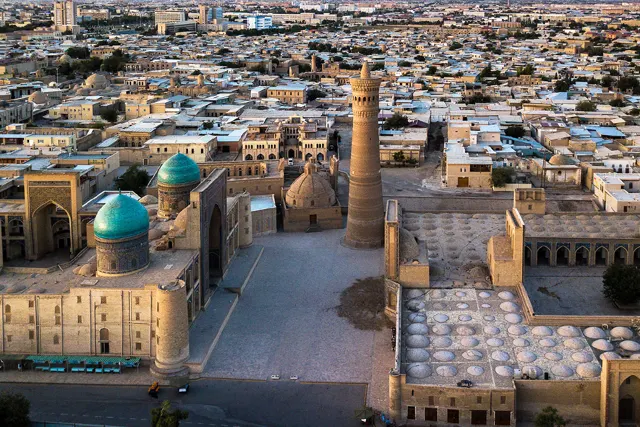 Po-i-KalyanIn the heart of Bukhara, a minaret, a mosque and a madrasah face each other across one courtyard, forming the city's most recognisable scene. With its nine-century-old minaret and blue-domed mosque, it is one of the easiest places to take in Central Asian architecture in a single square.
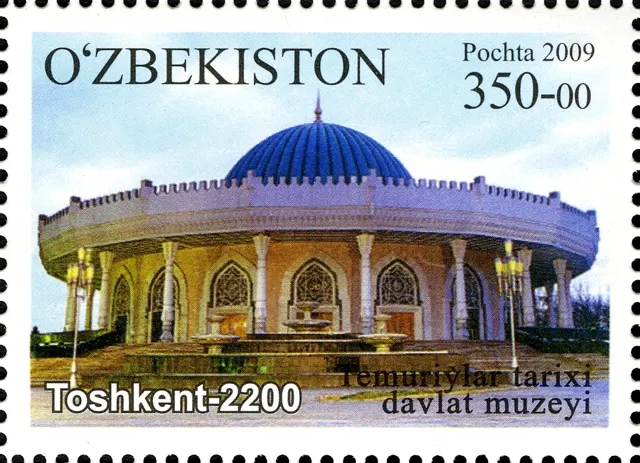 Amir Timur MuseumA blue-domed round building in the centre of Tashkent brings the world of Timur and the Timurid dynasty under one roof. Its collection of miniatures, manuscripts, coins and weapons makes a compact, rich introduction to Central Asian history.
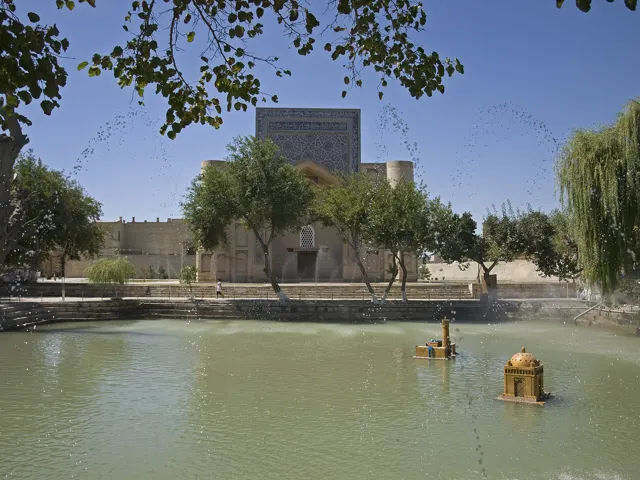 Lab-i HauzLab-i Hauz is a shaded pool in the heart of old Bukhara, framed by madrasas and a Sufi lodge from the 16th and 17th centuries. It is one of the best places in the city to sit with a cup of tea and watch daily life go by.
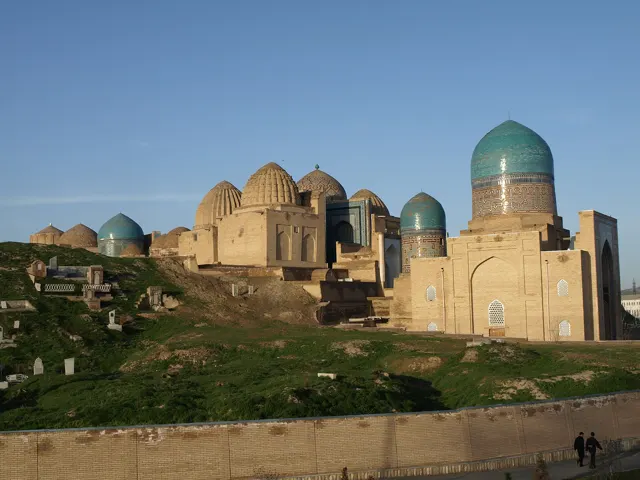 Shah-i-ZindaTucked into the north-east of Samarkand, Shah-i-Zinda is a narrow street of mausoleums lined with turquoise and deep-blue tilework, climbing up a stairway through centuries of Central Asian architecture. It is a place of living pilgrimage and a rare chance to see Timurid-era tomb art up close.
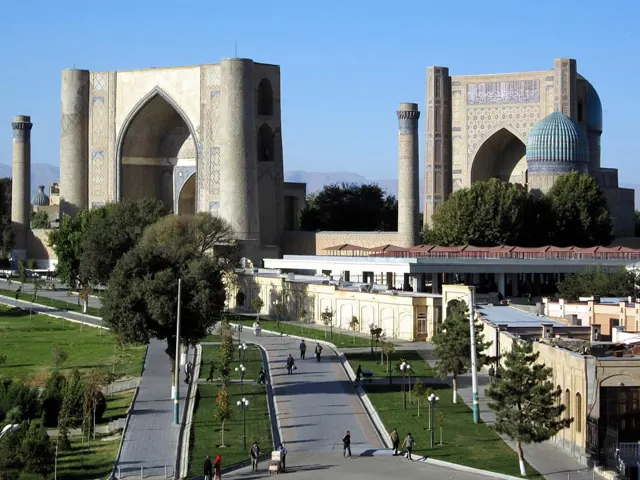 Bibi-Khanym MosqueRising above central Samarkand, the Bibi-Khanym Mosque is one of Timur's most ambitious projects, a vast courtyard mosque brought back from ruin. It is a rewarding stop for anyone who wants to see the scale of Timurid architecture up close.
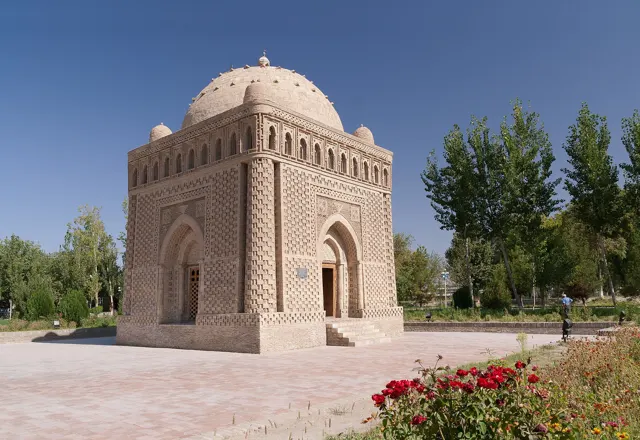 Samanid MausoleumStanding in a park just outside Bukhara's historic centre, the Samanid Mausoleum is one of the oldest funerary monuments in Central Asia. Small in size yet remarkably well proportioned, its brickwork rewards a slow look.
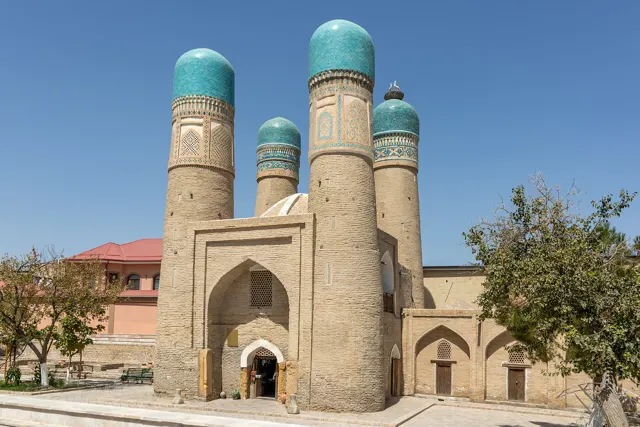 Chor MinorChor Minor is a small, unusual building in the lanes of Bukhara, topped by four blue-domed towers unlike anything else in the city. It sits just steps from the busy central squares, in the middle of everyday neighbourhood life.
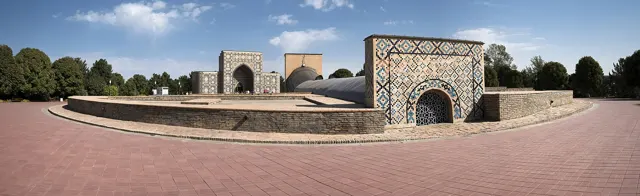 Ulugh Beg ObservatoryOn Kuhak hill in Samarkand lie the remains of one of the most advanced astronomical observatories of the 15th century. Standing by the huge underground arc once used to measure the sky, you can see how seriously the Timurid court took science.
Latest news
- Uzbekistan and World Bank discuss attracting investment
- Uzbekistan and IFC discuss transport and energy projects
- Uzbekistan to Create Full Cost Coverage System for Childhood Cancer Treatment
- Uzbekistan and EBRD discuss privatization and support for business
- Uzbekistan and Malaysia agree to train semiconductor workforce
- Mirziyoyev Discusses New Power Plants and Fuel Supplies With Foreign Investors