
 Azerbaijan
 Kazakhstan
 Kyrgyzstan
 Turkmenistan
 Northern Cyprus
 Türkiye
 Tatarstan
 Bashkortostan
 Sakha (Yakutia)
 Gagauzia
 North Macedonia
 Bulgaria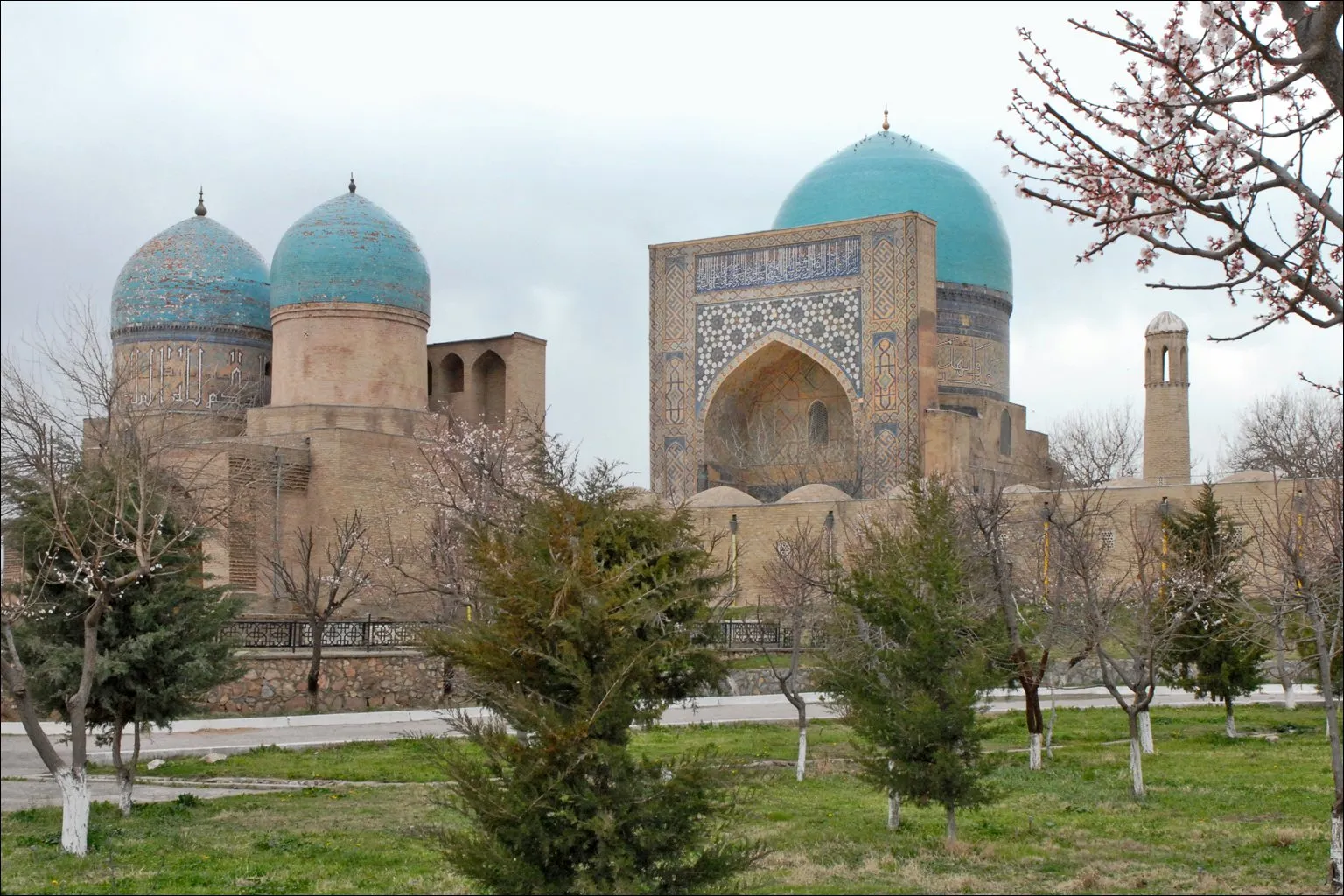
Shahrisabz
UNESCOShahrisabz, the birthplace of Timur, is one of Central Asia's oldest cities, with a history stretching back more than 2,700 years. It is an easy and rewarding trip from Samarkand if you want to see the towering remains of Ak-Saray and other Timurid monuments.
Why visit
Shahrisabz, historically known as Kesh or Kish, lies in Qashqadaryo Region in southern Uzbekistan. It is among the oldest cities of Central Asia and was an important urban centre of Sogdiana. Today it is best known as the birthplace of Timur.
The name comes from Persian words meaning "city" and "green", so "Green City". Its historic centre is on the UNESCO World Heritage List because of its Timurid monuments, and the Economic Cooperation Organization (ECO) named it its tourism capital for 2024.
How many days
Half a day to a full day is enough to see the main monuments, and many visitors come as a day trip from Samarkand.
If you prefer to go slowly, visit the bazaar and the museum, or explore the surroundings, a night here is a pleasant option.
Top sights
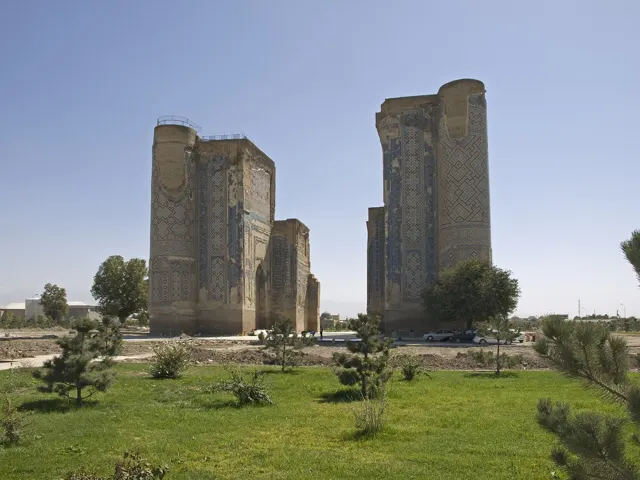
Ak-Saray, the "White Palace", was begun in 1380 as Timur's summer palace and was meant to be the grandest of his projects. Only parts of its gate-towers, about 65 metres high, survive, still showing blue, white and gold mosaic. An inscription above the entrance is said to read: "If you challenge our power, look at our buildings."
The Kok Gumbaz ("Blue Dome") Mosque was built by Ulugh Beg in 1437 in honour of his father, Shah Rukh. Behind it stands the Dorut Tilovat "House of Meditation", a mausoleum Ulugh Beg built in 1438 that appears never to have been used for burials. To the east, the Dorus-Saodat complex holds the tomb of Jahangir, Timur's eldest son, and the neighbouring mosque is said to house the tomb of the 8th-century imam Amir Kulal.
An underground chamber discovered in 1943 contains a stone sarcophagus intended for Timur, though he was buried in Samarkand. Medieval baths, an 18th-century bazaar and the Museum of History and Material Culture are also worth a look. Note that large-scale demolition in 2015 worried UNESCO, so the old town may look different from older photos.
Where to stay (neighbourhoods)
The city is small, so the choice of area matters little. Staying near Ak-Saray and the historic centre is the most practical option, as the monuments are within walking distance.
Accommodation is more limited than in Samarkand or Bukhara. Check current options and book ahead, especially in busy seasons.
Getting there and around
Shahrisabz is about 80 km south of Samarkand, at an elevation of 622 m. The road crosses a mountain pass, and most travellers come by taxi, shared car or organised tour. A railway station at Kitab and an airport are associated with the city; check current services before you go.
The historic centre can be explored on foot, and local taxis help for anything further out.
What to eat
Expect classic Uzbek dishes such as plov, shashlik, samsa, manti and fresh non bread. A tea house is a pleasant place to rest between sights.
The bazaar offers seasonal fruit and dried fruit and nuts. For local specialities, ask residents for recommendations.
Best time to visit
With Central Asia's continental climate, summers can be hot, so spring and autumn are generally more comfortable for walking between monuments. Winters can be cold.
Check the weather and current conditions before you go.
Day trips
Samarkand is the usual base, and Shahrisabz is most often visited as a day trip from there. For those with a keen interest in archaeology, the nearby Kitab district has ancient sites such as Padayaktepa, linked to ancient Nautaca.
Check access and visiting conditions in advance.
Map
Places to see
Latest news
- Uzbekistan and World Bank discuss attracting investment
- Uzbekistan and IFC discuss transport and energy projects
- Uzbekistan to Create Full Cost Coverage System for Childhood Cancer Treatment
- Uzbekistan and EBRD discuss privatization and support for business
- Uzbekistan and Malaysia agree to train semiconductor workforce
- Mirziyoyev Discusses New Power Plants and Fuel Supplies With Foreign Investors