
 Azerbaijan
 Kazakhstan
 Kyrgyzstan
 Turkmenistan
 Northern Cyprus
 Türkiye
 Tatarstan
 Bashkortostan
 Sakha (Yakutia)
 Gagauzia
 North Macedonia
 Bulgaria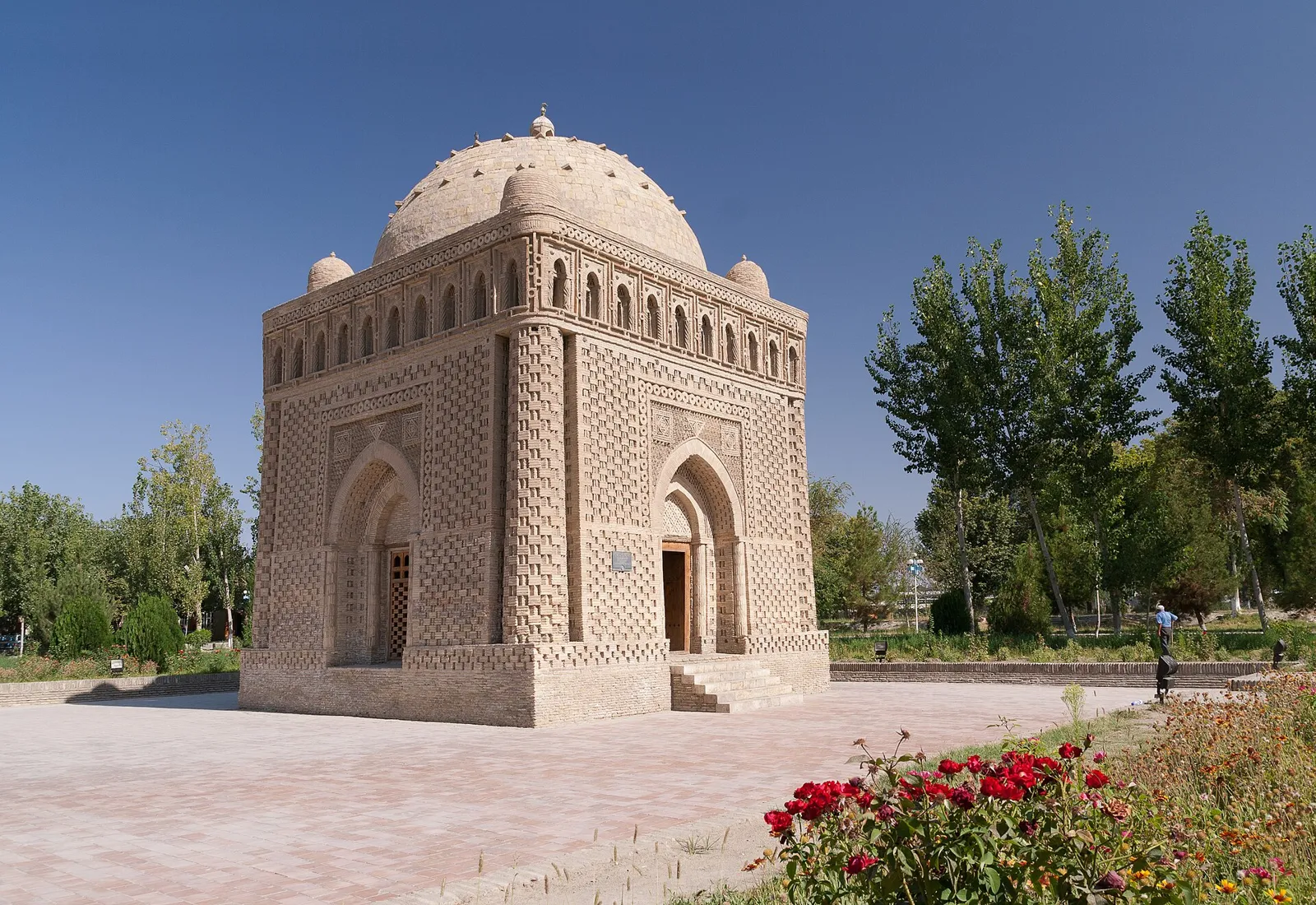

Samanid Mausoleum
Standing in a park just outside Bukhara's historic centre, the Samanid Mausoleum is one of the oldest funerary monuments in Central Asia. Small in size yet remarkably well proportioned, its brickwork rewards a slow look.
History
The Samanid Mausoleum was built in the 10th century as a dynastic tomb for the Samanids. They had become de facto independent of the Abbasid Caliphate, made Bukhara their capital and ruled parts of today's Uzbekistan, Tajikistan, Afghanistan, Iran and Kazakhstan. Bukhara was then a major centre of trade, science and the arts.
Scholars disagree on exactly when it was built. Some link it to Ismail Samani, some to his father Ahmad, and others to his grandson Nasr II, whose name appears on a Kufic-inscribed lintel found during 1930s restoration. Three male burials were found inside, and only one is tied to Nasr II.
The tomb is believed to have been buried by silt and mud for centuries, which may be why it escaped the Mongol sack of Bukhara. Soviet-era excavations and restoration in the 20th century brought it back into view. It is the only surviving monument of the Samanid era and forms part of Bukhara's UNESCO-listed historic centre.
What to see
The building is a small, slightly tapering cube about 9.4 metres on each side. Its four facades are identical, each with a pointed-arch entrance. Heavy corner half-columns give it a fortress-like base, while an arcaded gallery below the cornice lightens the top.
Everything is made of baked brick, laid in geometric and rhythmic patterns that seem to shift with the light during the day. A large central dome is flanked by four small ones at the corners. Inside, look at the squinches that carry the dome over the square room.
The mausoleum sits within a park created in the Soviet era, which still surrounds it, and a restored pond lies nearby.
Visiting tips
The mausoleum lies just outside the historic centre, so you can walk from the old town or take a short taxi ride. Entry arrangements and opening times can change, so check before you go.
The brickwork looks best in soft light, early in the morning or towards sunset. The building is small, so a visit is short; it fits easily into a day with Bukhara's other monuments, along with a stroll through the park.
Map
Places to see
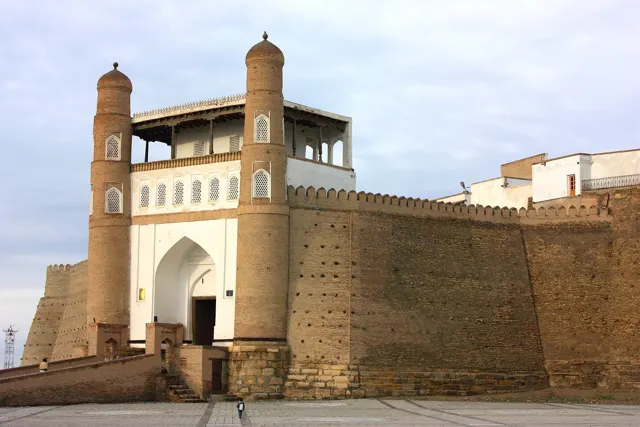 Ark of BukharaRising nearly twenty metres above the plain in the north-west of Bukhara, the Ark is among the oldest parts of the city. Inside its walls you can combine museums, restored palace spaces and centuries of dynastic history in a single visit.
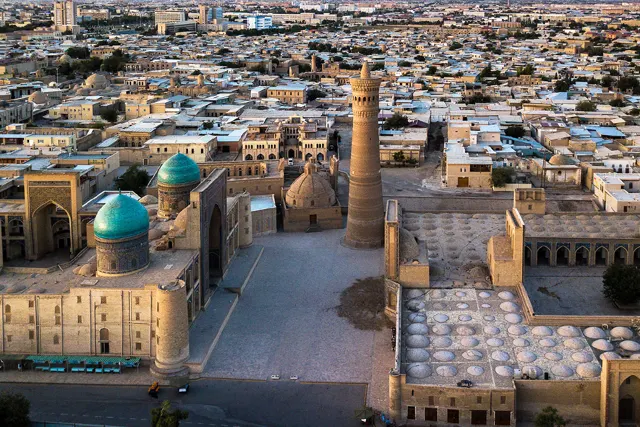 Po-i-KalyanIn the heart of Bukhara, a minaret, a mosque and a madrasah face each other across one courtyard, forming the city's most recognisable scene. With its nine-century-old minaret and blue-domed mosque, it is one of the easiest places to take in Central Asian architecture in a single square.
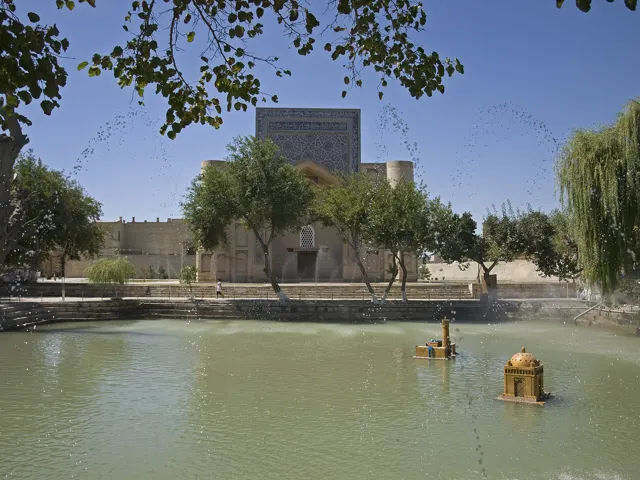 Lab-i HauzLab-i Hauz is a shaded pool in the heart of old Bukhara, framed by madrasas and a Sufi lodge from the 16th and 17th centuries. It is one of the best places in the city to sit with a cup of tea and watch daily life go by.
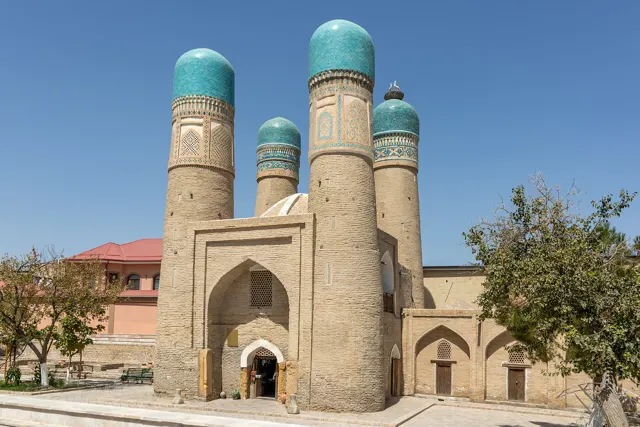 Chor MinorChor Minor is a small, unusual building in the lanes of Bukhara, topped by four blue-domed towers unlike anything else in the city. It sits just steps from the busy central squares, in the middle of everyday neighbourhood life.
Latest news
- Uzbekistan and World Bank discuss attracting investment
- Uzbekistan and IFC discuss transport and energy projects
- Uzbekistan to Create Full Cost Coverage System for Childhood Cancer Treatment
- Uzbekistan and EBRD discuss privatization and support for business
- Uzbekistan and Malaysia agree to train semiconductor workforce
- Mirziyoyev Discusses New Power Plants and Fuel Supplies With Foreign Investors