
 Azerbaijan
 Kazakhstan
 Kyrgyzstan
 Turkmenistan
 Northern Cyprus
 Türkiye
 Tatarstan
 Bashkortostan
 Sakha (Yakutia)
 Gagauzia
 North Macedonia
 Bulgaria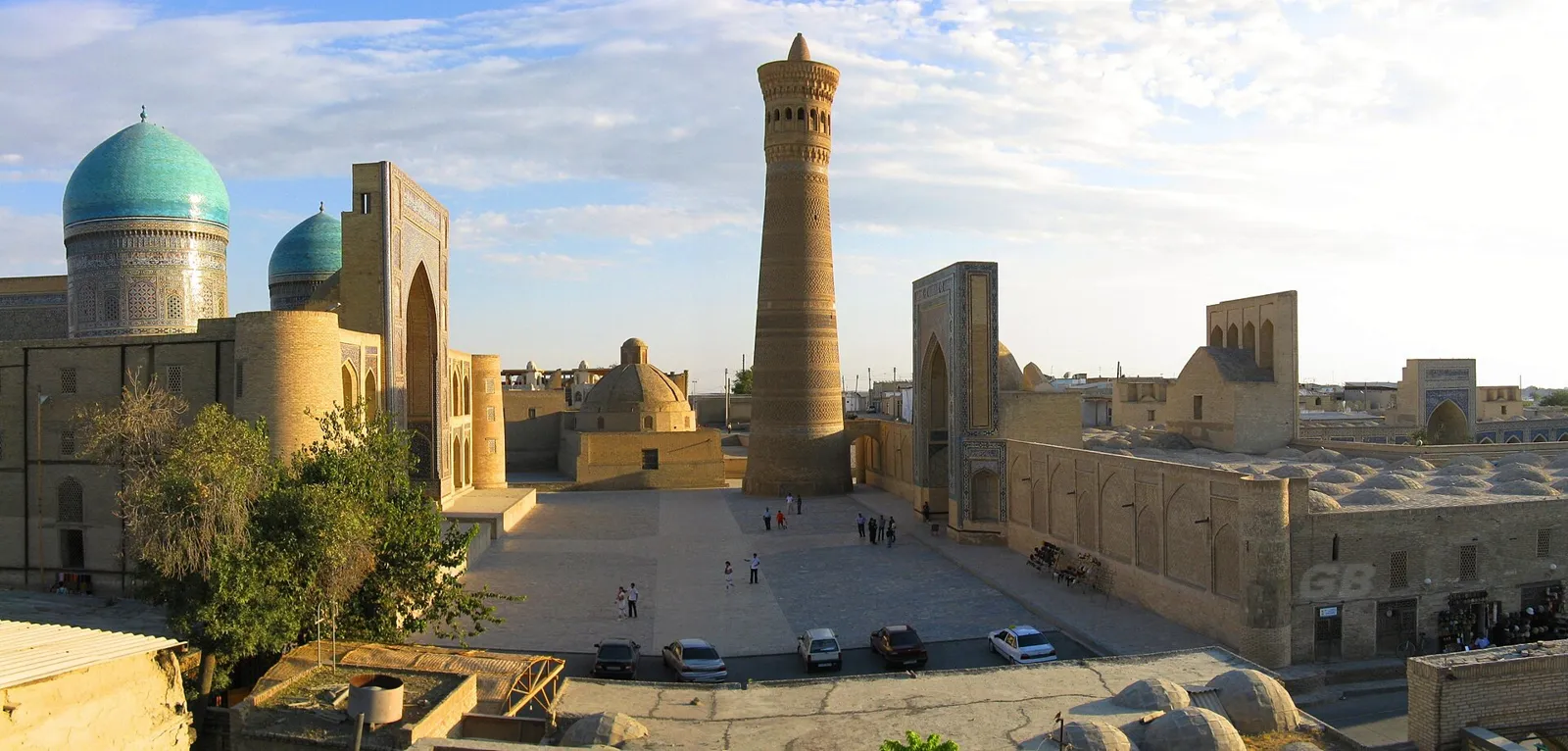

Bukhara
Bukhara is an Uzbek city with some 2,500 years of recorded history on the Silk Road, and its historic centre is a UNESCO World Heritage Site. Minarets, madrasas, trading domes and teahouses by the pool make it an easy and rewarding city to explore on foot.
Why visit
Bukhara is one of the oldest settlements in Central Asia, and archaeology points to a history of at least 2,500 years. It prospered on the Silk Road, served as capital of the Samanid Empire, and remained important under the Karakhanids and the later Uzbek khanate. The hadith scholar Imam Bukhari was born here.
The historic centre is a UNESCO World Heritage Site, and the city is credited with about 140 architectural monuments. Its charm comes less from any single building than from how closely mosques, madrasas, bazaar domes and pools sit together within walking distance. For those interested in the Turkic world, the Karakhanid legacy is especially meaningful.
How many days
Two full days is enough for most visitors to see the main monuments. That leaves time to wander the old centre, step inside a few madrasas and sit by the pool in the evening.
If you are combining Bukhara with Samarkand and Khiva, three days gives you room to add a side trip as well.
Top sights
The Ark is the old fortress of the city's rulers, standing on an artificial mound. The Po-i-Kalyan complex sits at the foot of the Kalyan Minaret, a Karakhanid-era tower that dominates the historic centre, with a mosque and madrasa beside it.
Lab-i Hauz is a gathering place built around a large tree-shaded pool. The Samanid Mausoleum, from the 9th to 10th century, is among the city's oldest and best-known monuments. Chor Minor is a small, distinctive building with four towers. Check entry conditions and visiting hours before you go.
Where to stay (neighbourhoods)
The most practical base is the historic centre around Lab-i Hauz. Bazaars, madrasas and the Kalyan Minaret are all within walking distance, and the area stays lively in the evening. Small guesthouses and traditional courtyard houses are common here.
For somewhere quieter, look near the Ark or on the edges of the old town. Book ahead in busy seasons.
Getting there and around
Bukhara can be reached from Uzbekistan's main cities by train, road and air. There are high-speed rail links with Tashkent and Samarkand; check schedules and ticket details before you go. The airport is relatively close to the centre.
Most sights in the old town are walkable. For farther points, taxis are available, and it is wise to agree the fare with the driver beforehand.
What to eat
The classics of Uzbek cuisine are all here: plov, shashlik, samsa and dumpling-style dishes, with tea and fresh bread at almost every table.
Sitting in a teahouse near the pool with tea, local sweets and dried fruit and nuts is one of the pleasant pauses of a visit. The bazaars also sell fresh and dried fruit.
Best time to visit
Spring and autumn are the most comfortable seasons for sightseeing. Summers are hot and dry, and walking outdoors at midday can be tiring. Winters are cold with short days, but the city is quieter.
In summer, early mornings and late evenings are the best times to be out.
Day trips
A few places linked to the oasis's history can be visited from Bukhara, including nearby shrine and old-village complexes. Check access and whether they are open before heading out.
Tours to desert and caravanserai routes are also arranged. Ask your accommodation or local sources about the options.
Map
Places to see
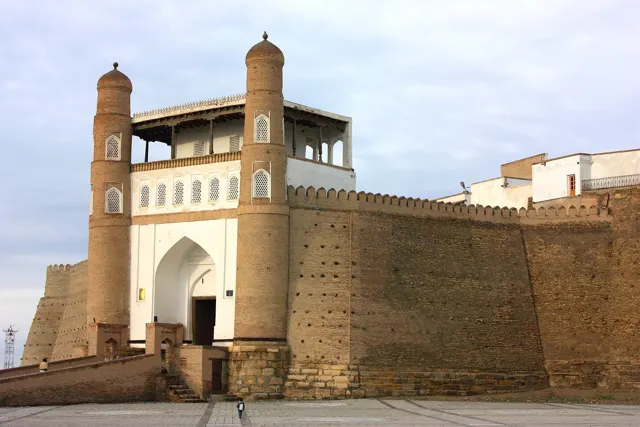 Ark of BukharaRising nearly twenty metres above the plain in the north-west of Bukhara, the Ark is among the oldest parts of the city. Inside its walls you can combine museums, restored palace spaces and centuries of dynastic history in a single visit.
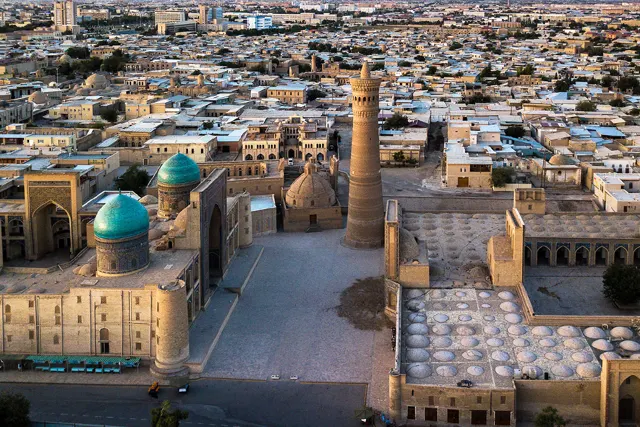 Po-i-KalyanIn the heart of Bukhara, a minaret, a mosque and a madrasah face each other across one courtyard, forming the city's most recognisable scene. With its nine-century-old minaret and blue-domed mosque, it is one of the easiest places to take in Central Asian architecture in a single square.
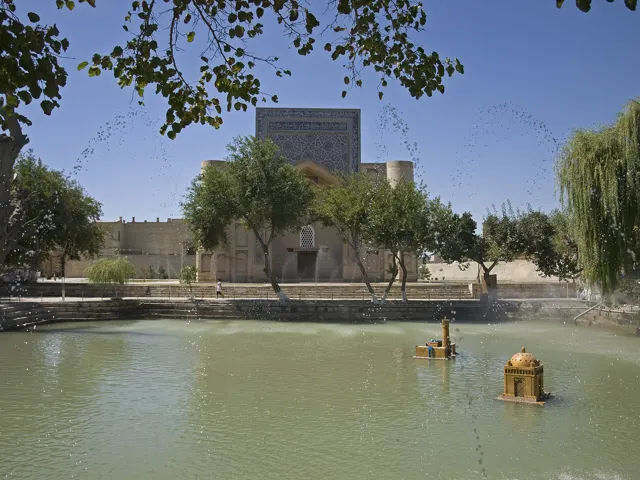 Lab-i HauzLab-i Hauz is a shaded pool in the heart of old Bukhara, framed by madrasas and a Sufi lodge from the 16th and 17th centuries. It is one of the best places in the city to sit with a cup of tea and watch daily life go by.
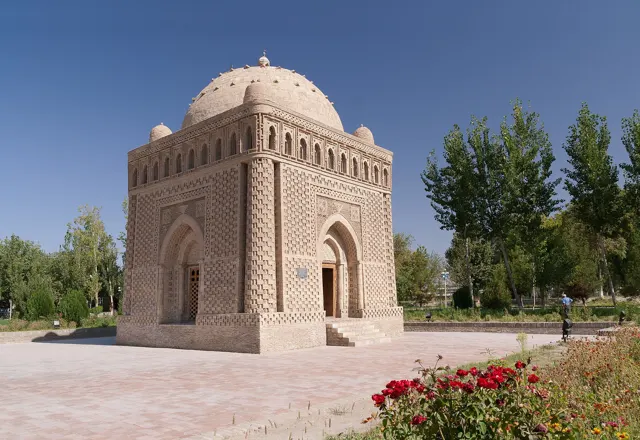 Samanid MausoleumStanding in a park just outside Bukhara's historic centre, the Samanid Mausoleum is one of the oldest funerary monuments in Central Asia. Small in size yet remarkably well proportioned, its brickwork rewards a slow look.
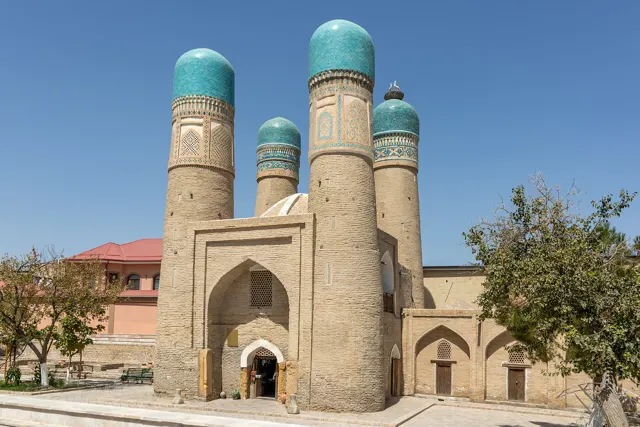 Chor MinorChor Minor is a small, unusual building in the lanes of Bukhara, topped by four blue-domed towers unlike anything else in the city. It sits just steps from the busy central squares, in the middle of everyday neighbourhood life.
Latest news
- Uzbekistan and World Bank discuss attracting investment
- Uzbekistan and IFC discuss transport and energy projects
- Uzbekistan to Create Full Cost Coverage System for Childhood Cancer Treatment
- Uzbekistan and EBRD discuss privatization and support for business
- Uzbekistan and Malaysia agree to train semiconductor workforce
- Mirziyoyev Discusses New Power Plants and Fuel Supplies With Foreign Investors