
 Azerbaijan
 Kazakhstan
 Kyrgyzstan
 Turkmenistan
 Northern Cyprus
 Türkiye
 Tatarstan
 Bashkortostan
 Sakha (Yakutia)
 Gagauzia
 North Macedonia
 Bulgaria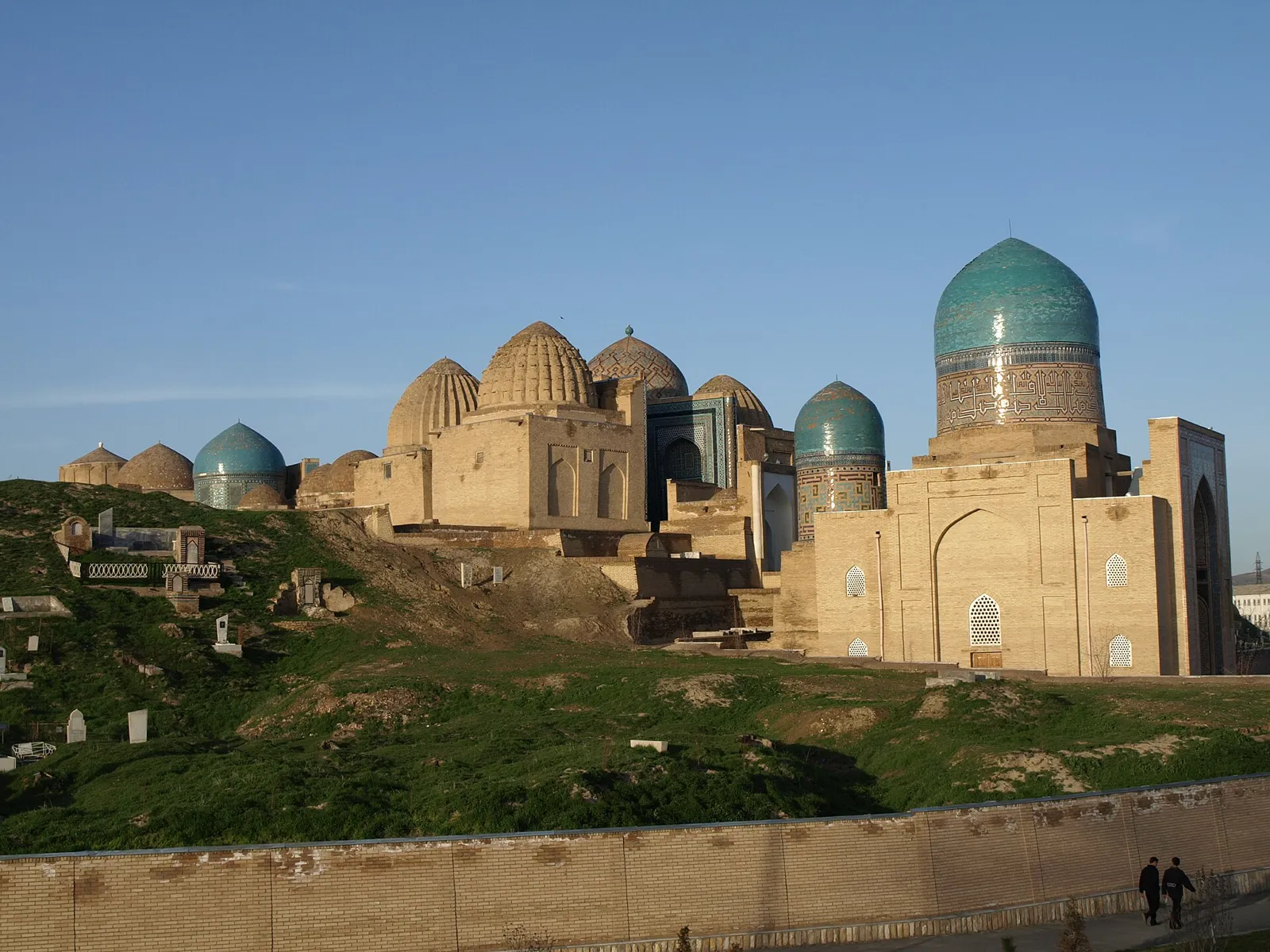

Shah-i-Zinda
Tucked into the north-east of Samarkand, Shah-i-Zinda is a narrow street of mausoleums lined with turquoise and deep-blue tilework, climbing up a stairway through centuries of Central Asian architecture. It is a place of living pilgrimage and a rare chance to see Timurid-era tomb art up close.
History
Shah-i-Zinda is a necropolis in the north-eastern part of Samarkand. Its Persian name means "the Living King" and is linked to the legend of Qutham ibn Abbas, a cousin of the Prophet Muhammad, said to have come to Samarkand with the Arab conquest in the 7th century to preach Islam. One tradition holds that he was beheaded while praying, picked up his head and walked into a deep well known as the Garden of Paradise, where he is said to live still.
The complex grew over about eight centuries, from the 11th to the 19th, and now includes more than twenty buildings. Of the earliest structures mostly only bases and gravestones remain. Most of what you see dates from the 14th and 15th centuries under the Timurids, and later repairs did not greatly alter its look. It was inscribed on the UNESCO World Heritage List in 2001, together with other historic sites of Samarkand.
What to see
The ensemble is divided into lower, middle and upper groups, linked by domed, four-arched passages called chartaks. The main gateway was built under Ulugh Beg in 1434-35. Near the staircase in the lower group stands the double-domed mausoleum of Kazi Zade Rumi, a scholar and astronomer.
The middle group holds mausoleums of Timur's relatives and of military and religious notables. Those of his niece Turkan Aga (1372) and his sister Shirin Bika Aga are admired for their rich tile decoration, and the unusual octagonal crypt nearby is easy to spot. In the upper group, three mausoleums face one another around a shaded courtyard, including that of Khodja Akhmad from the 1340s. The Qutham ibn Abbas complex lies at the north-eastern end.
Visiting tips
Shah-i-Zinda remains an active place of pilgrimage, so dress modestly, covering shoulders and knees, and keep your voice low inside the mausoleums. The path climbs a stairway and the paving can be uneven, so wear comfortable shoes.
Check entry fees and opening hours before you go. Early morning or late afternoon usually offers softer light on the tiles and fewer crowds. Rules on photography can vary, so ask at the entrance.
Map
Places to see
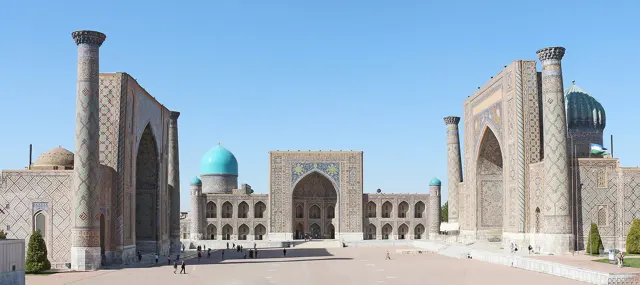 RegistanIn the heart of Samarkand, three grand madrasas with turquoise domes and richly tiled façades face a historic square. Registan is one of the finest ensembles of Islamic architecture in Central Asia, with centuries of Timurid and later history written into its walls.
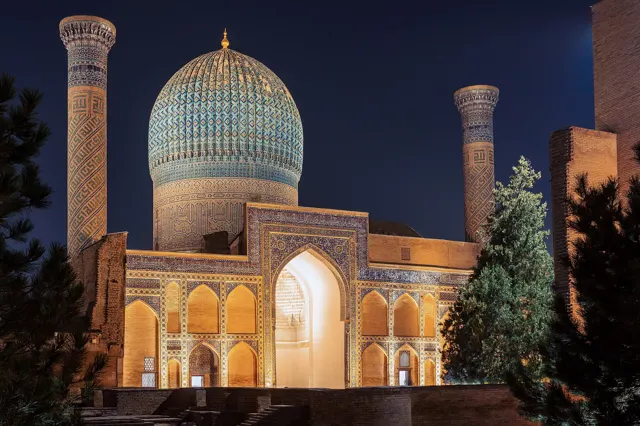 Gur-e AmirGur-e Amir in Samarkand is the mausoleum of Timur and several members of his dynasty, recognisable by its ribbed turquoise-blue dome. It is a compact visit that shows the roots of the architecture later seen in the Mughal tombs of India.
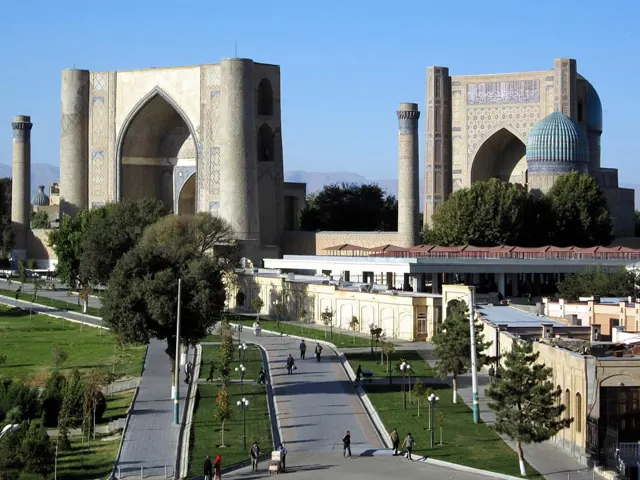 Bibi-Khanym MosqueRising above central Samarkand, the Bibi-Khanym Mosque is one of Timur's most ambitious projects, a vast courtyard mosque brought back from ruin. It is a rewarding stop for anyone who wants to see the scale of Timurid architecture up close.
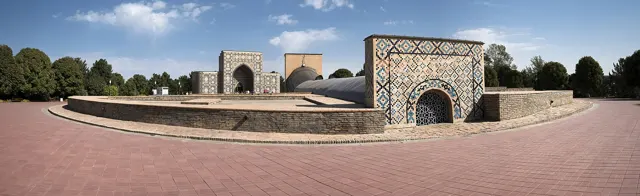 Ulugh Beg ObservatoryOn Kuhak hill in Samarkand lie the remains of one of the most advanced astronomical observatories of the 15th century. Standing by the huge underground arc once used to measure the sky, you can see how seriously the Timurid court took science.
Latest news
- Uzbekistan and World Bank discuss attracting investment
- Uzbekistan and IFC discuss transport and energy projects
- Uzbekistan to Create Full Cost Coverage System for Childhood Cancer Treatment
- Uzbekistan and EBRD discuss privatization and support for business
- Uzbekistan and Malaysia agree to train semiconductor workforce
- Mirziyoyev Discusses New Power Plants and Fuel Supplies With Foreign Investors