
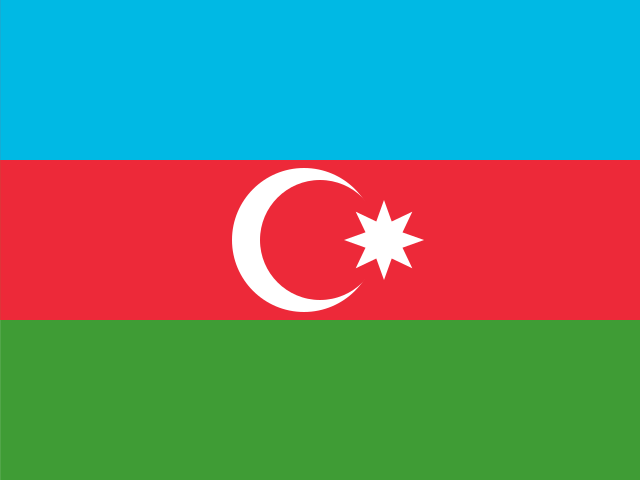
 Azerbaijan
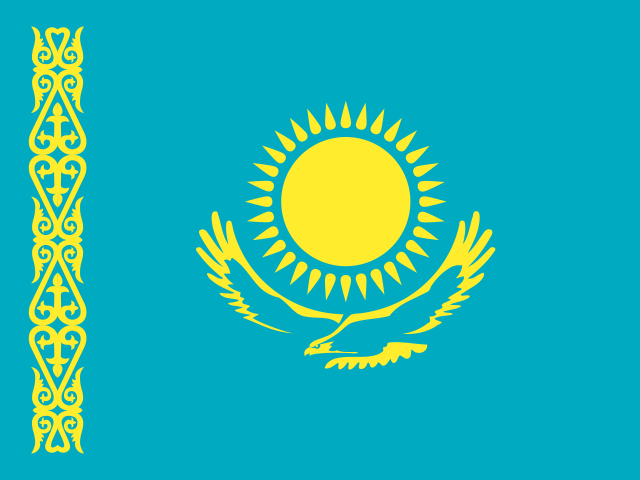 Kazakhstan
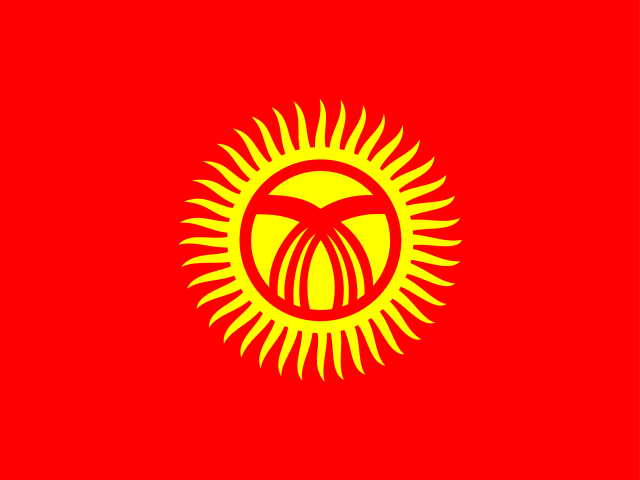 Kyrgyzstan
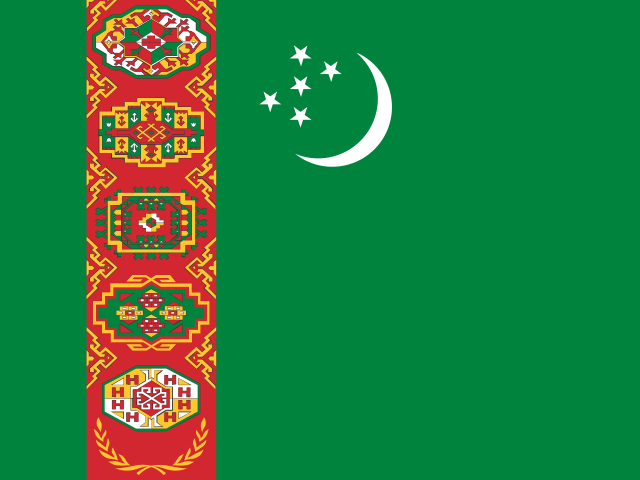 Turkmenistan
 Northern Cyprus
 Türkiye
 Tatarstan
 Bashkortostan
 Sakha (Yakutia)
 Gagauzia
 North Macedonia
 Bulgaria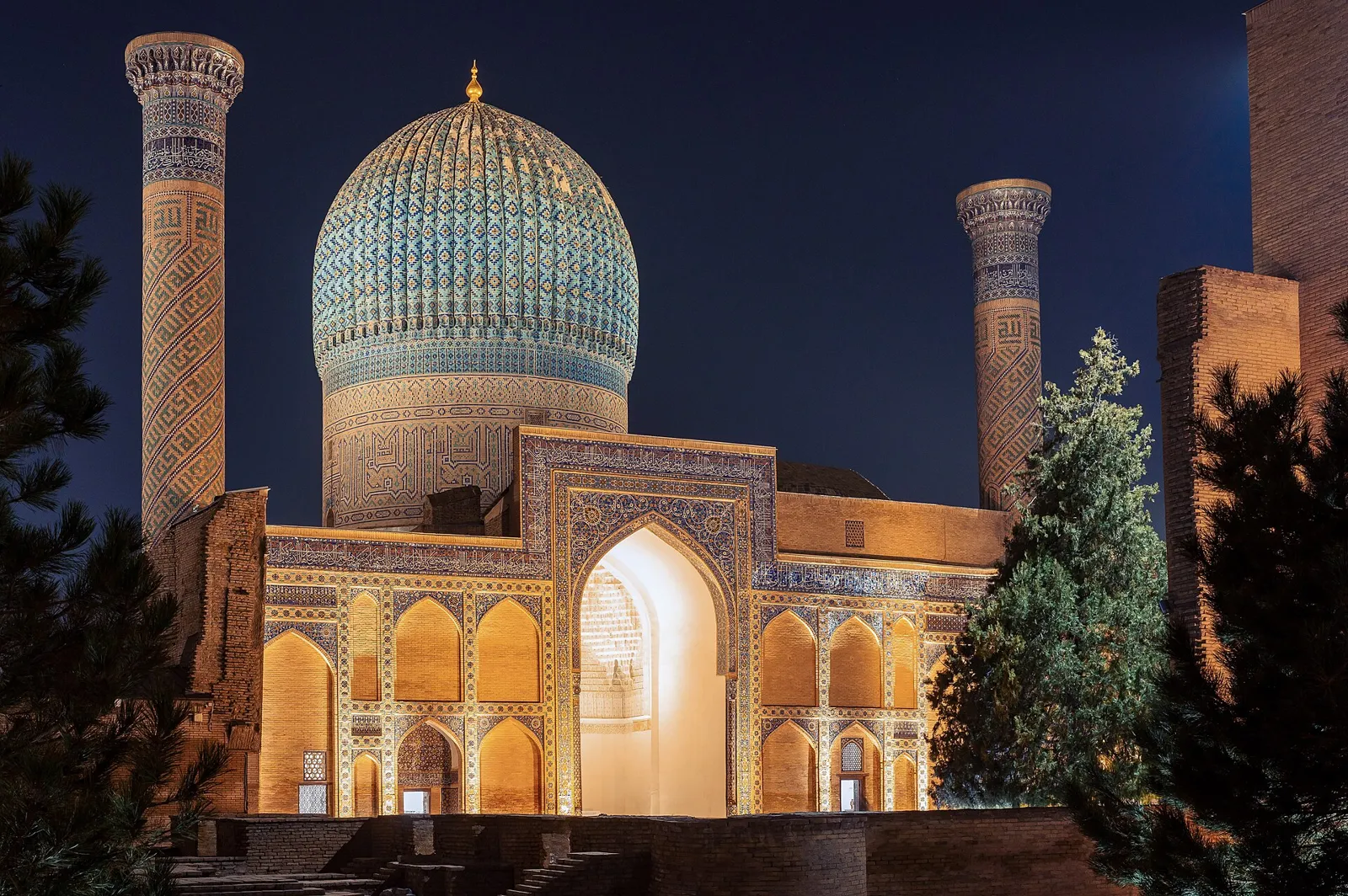
Gur-e Amir
Gur-e Amir in Samarkand is the mausoleum of Timur and several members of his dynasty, recognisable by its ribbed turquoise-blue dome. It is a compact visit that shows the roots of the architecture later seen in the Mughal tombs of India.
History
The oldest part of the complex is the madrasa and khanqah built at the end of the 14th century on the orders of Muhammad Sultan, Timur's heir apparent. When Muhammad Sultan died suddenly in 1403, Timur began a mausoleum for him. Timur had prepared a smaller tomb for himself in Shahrisabz, near his Ak-Saray Palace, but when he died at Otrar in 1405 on his campaign towards China, the passes to Shahrisabz were reportedly snowed in, and he was buried here instead.
His grandson Ulugh Beg completed the work, and during his reign the building became the family crypt of the Timurid dynasty. The architect is generally named as Muhammad ibn Mahmud of Isfahan. After the late 17th century Samarkand declined and its monuments were neglected; major restoration came mostly after the Second World War. In 1941 the tomb was opened under the Soviet anthropologist Mikhail Gerasimov, an event around which a legend of a curse grew; some say the story is a later invention, but it persists.
What to see
From outside, the building is an octagonal structure crowned by a fluted turquoise dome. The walls carry geometric and inscriptional patterns in blue, light blue and white tiles set against terracotta brick, and the entrance portal is decorated with carved brick and mosaic. Of the original madrasa and khanqah, only foundations, the entrance portal and part of one minaret remain.
Inside is a tall chamber with deep niches. The lower walls are covered with onyx panels, above which runs a marble stalactite cornice, while the arches and dome are adorned with gilded and painted relief work. Timur's headstone is a block of dark green jade, beside the markers of his sons Miran Shah and Shah Rukh, his grandsons Muhammad Sultan and Ulugh Beg, and his teacher Mir Said Baraka. These stones mark the real graves, which lie in a crypt directly beneath.
Visiting tips
Gur-e Amir is within Samarkand and can be reached from the centre by a short ride or on foot. If you are also visiting the Registan, the two fit comfortably into one day. Check entry conditions, opening times and photography rules before you go.
As it is a place of remembrance, quiet and modest dress are appropriate. The light on the dome and tiles changes through the day, so photographers may prefer morning or late afternoon. The interior is fairly small, and going outside the busiest hours makes it easier to take in the details.
Map
Places to see
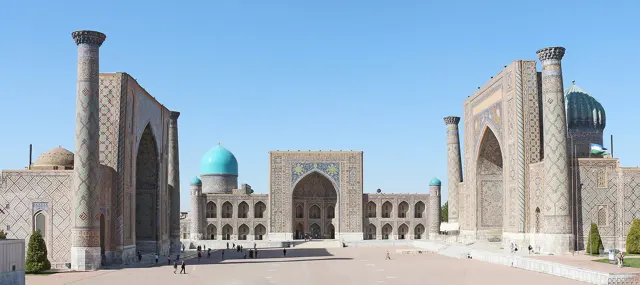 RegistanIn the heart of Samarkand, three grand madrasas with turquoise domes and richly tiled façades face a historic square. Registan is one of the finest ensembles of Islamic architecture in Central Asia, with centuries of Timurid and later history written into its walls.
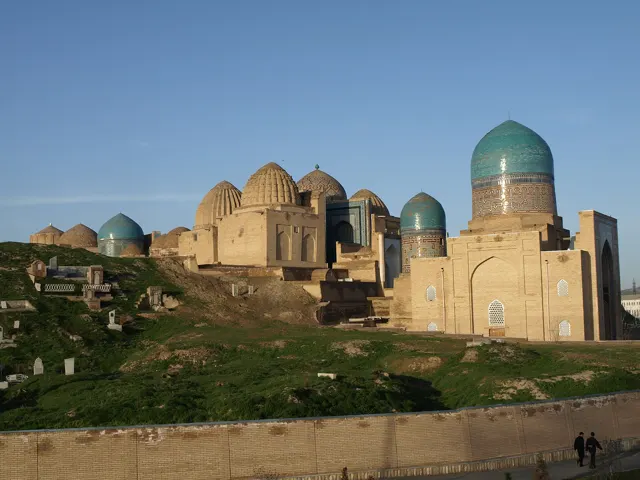 Shah-i-ZindaTucked into the north-east of Samarkand, Shah-i-Zinda is a narrow street of mausoleums lined with turquoise and deep-blue tilework, climbing up a stairway through centuries of Central Asian architecture. It is a place of living pilgrimage and a rare chance to see Timurid-era tomb art up close.
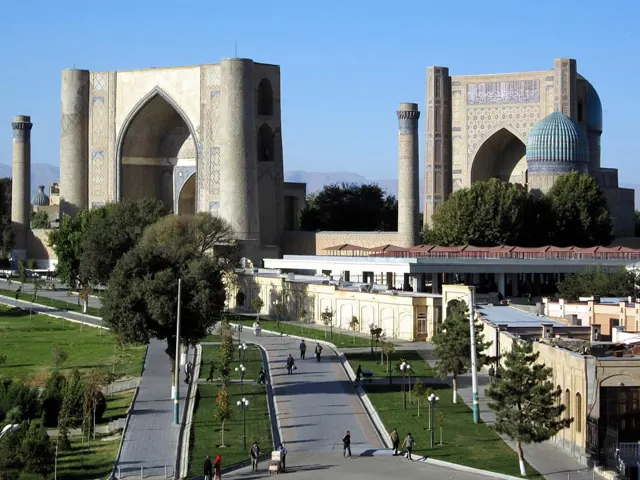 Bibi-Khanym MosqueRising above central Samarkand, the Bibi-Khanym Mosque is one of Timur's most ambitious projects, a vast courtyard mosque brought back from ruin. It is a rewarding stop for anyone who wants to see the scale of Timurid architecture up close.
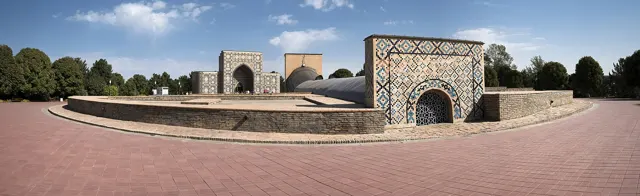 Ulugh Beg ObservatoryOn Kuhak hill in Samarkand lie the remains of one of the most advanced astronomical observatories of the 15th century. Standing by the huge underground arc once used to measure the sky, you can see how seriously the Timurid court took science.
Latest news
- Uzbekistan and World Bank discuss attracting investment
- Uzbekistan and IFC discuss transport and energy projects
- Uzbekistan to Create Full Cost Coverage System for Childhood Cancer Treatment
- Uzbekistan and EBRD discuss privatization and support for business
- Uzbekistan and Malaysia agree to train semiconductor workforce
- Mirziyoyev Discusses New Power Plants and Fuel Supplies With Foreign Investors