
 Azerbaijan
 Kazakhstan
 Kyrgyzstan
 Turkmenistan
 Northern Cyprus
 Türkiye
 Tatarstan
 Bashkortostan
 Sakha (Yakutia)
 Gagauzia
 North Macedonia
 Bulgaria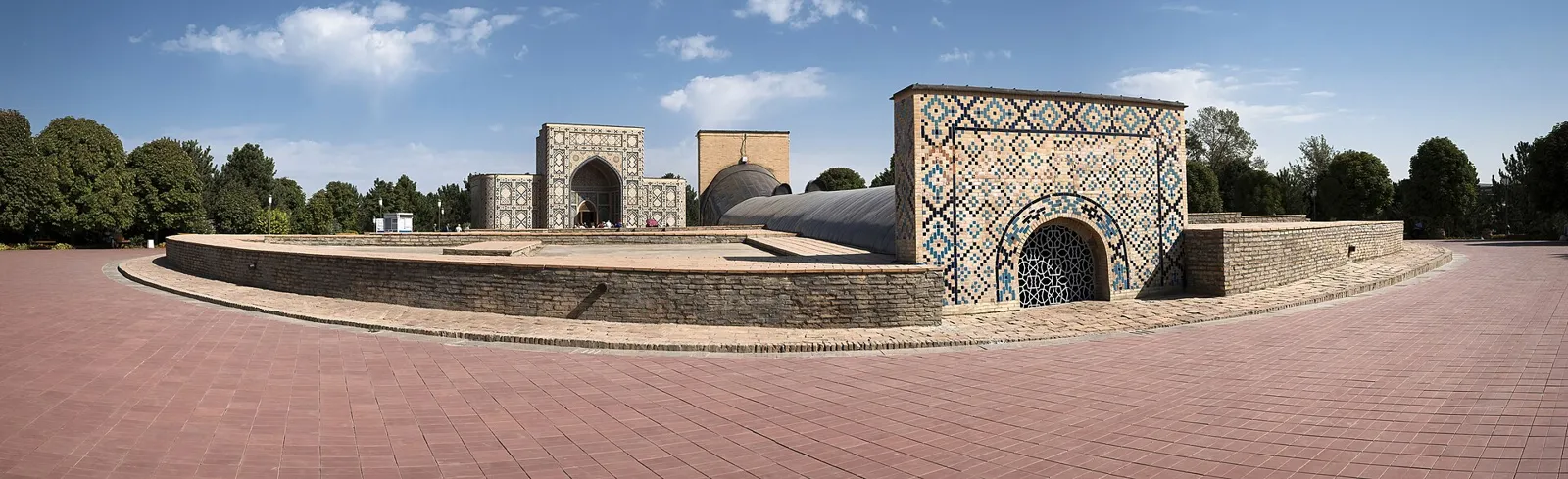

Ulugh Beg Observatory
On Kuhak hill in Samarkand lie the remains of one of the most advanced astronomical observatories of the 15th century. Standing by the huge underground arc once used to measure the sky, you can see how seriously the Timurid court took science.
History
The observatory was built in the 1420s by Ulugh Beg, grandson of Amir Timur and ruler of Samarkand. Sources differ slightly on the exact start and completion dates, but it was generally ready around 1428-1429. Ulugh Beg had a deep interest in mathematics and astronomy and brought leading scholars of the age to his city.
Jamshid al-Kashi was the first director, followed by Qadi Zada al-Rumi and then Ali Qushji. The observations made here fed into the Zij-i Sultani, completed in 1437, a star catalogue and set of astronomical tables that remained influential in both East and West for centuries.
After Ulugh Beg was assassinated around 1449, the observatory declined. Accounts differ on the details: some say it was destroyed soon afterwards, while others say work continued for a time under Ali Qushji. The site was eventually forgotten, until the Russian archaeologist Vassily Vyatkin uncovered its remains in 1908.
What to see
Little of the original building survives above ground. What you see are mainly the foundations and the buried part of the great instrument, a huge arc cut into the bedrock and lined with marble. Degree markings and brick stairways along its sides can still be made out.
Reconstructions suggest a three-storey cylindrical building, but there is no standing structure to walk into today. A small museum is usually found on the site, with exhibits on Ulugh Beg and the scholars who worked with him; check its current status before you go.
Visiting tips
The observatory sits on Kuhak hill, northeast of central Samarkand, and is easy to reach by taxi or local transport. Much of the visit is outdoors, so in summer early morning or late afternoon is more comfortable, and good walking shoes help.
Entry conditions, opening times and fees can change, so check before you go. It fits well into a day with other Samarkand sights such as the Registan and Shah-i-Zinda, but give yourself time to read the museum displays, as they make the ruins much easier to understand.
Map
Places to see
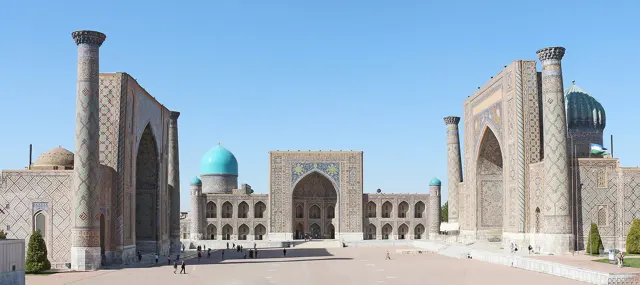 RegistanIn the heart of Samarkand, three grand madrasas with turquoise domes and richly tiled façades face a historic square. Registan is one of the finest ensembles of Islamic architecture in Central Asia, with centuries of Timurid and later history written into its walls.
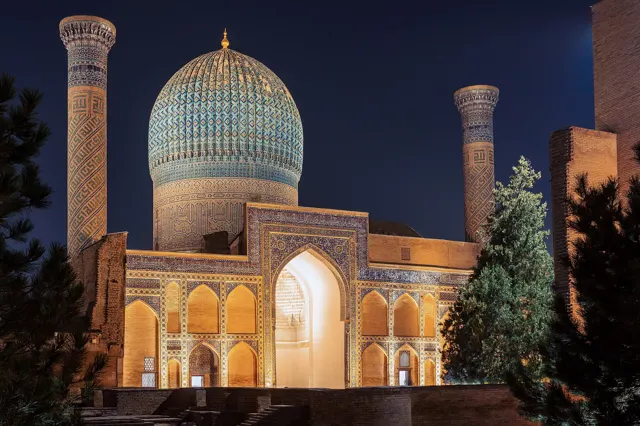 Gur-e AmirGur-e Amir in Samarkand is the mausoleum of Timur and several members of his dynasty, recognisable by its ribbed turquoise-blue dome. It is a compact visit that shows the roots of the architecture later seen in the Mughal tombs of India.
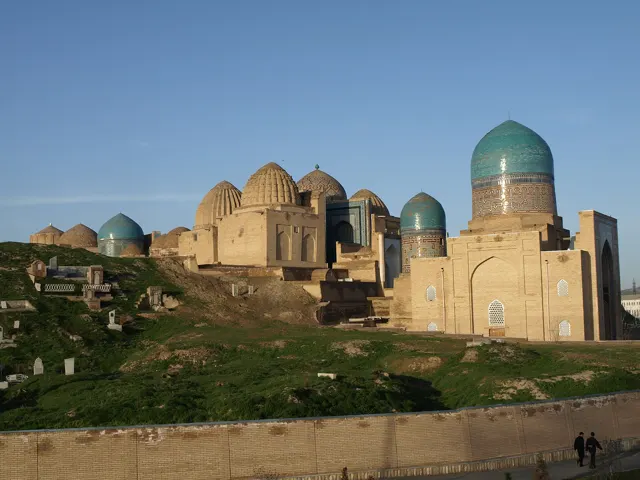 Shah-i-ZindaTucked into the north-east of Samarkand, Shah-i-Zinda is a narrow street of mausoleums lined with turquoise and deep-blue tilework, climbing up a stairway through centuries of Central Asian architecture. It is a place of living pilgrimage and a rare chance to see Timurid-era tomb art up close.
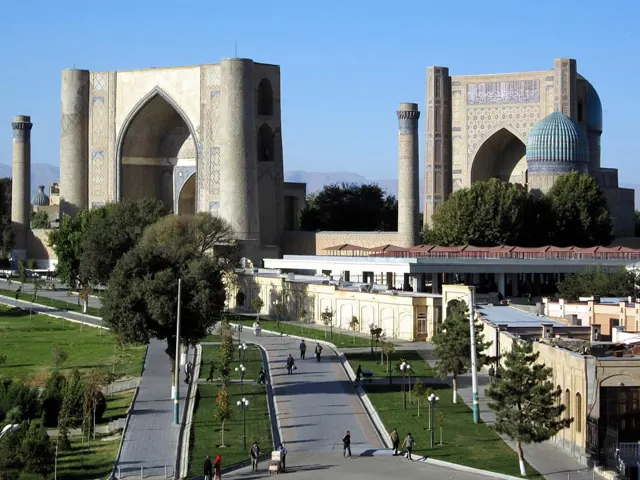 Bibi-Khanym MosqueRising above central Samarkand, the Bibi-Khanym Mosque is one of Timur's most ambitious projects, a vast courtyard mosque brought back from ruin. It is a rewarding stop for anyone who wants to see the scale of Timurid architecture up close.
Latest news
- Uzbekistan and World Bank discuss attracting investment
- Uzbekistan and IFC discuss transport and energy projects
- Uzbekistan to Create Full Cost Coverage System for Childhood Cancer Treatment
- Uzbekistan and EBRD discuss privatization and support for business
- Uzbekistan and Malaysia agree to train semiconductor workforce
- Mirziyoyev Discusses New Power Plants and Fuel Supplies With Foreign Investors