
 Azerbaijan
 Kazakhstan
 Kyrgyzstan
 Turkmenistan
 Northern Cyprus
 Türkiye
 Tatarstan
 Bashkortostan
 Sakha (Yakutia)
 Gagauzia
 North Macedonia
 Bulgaria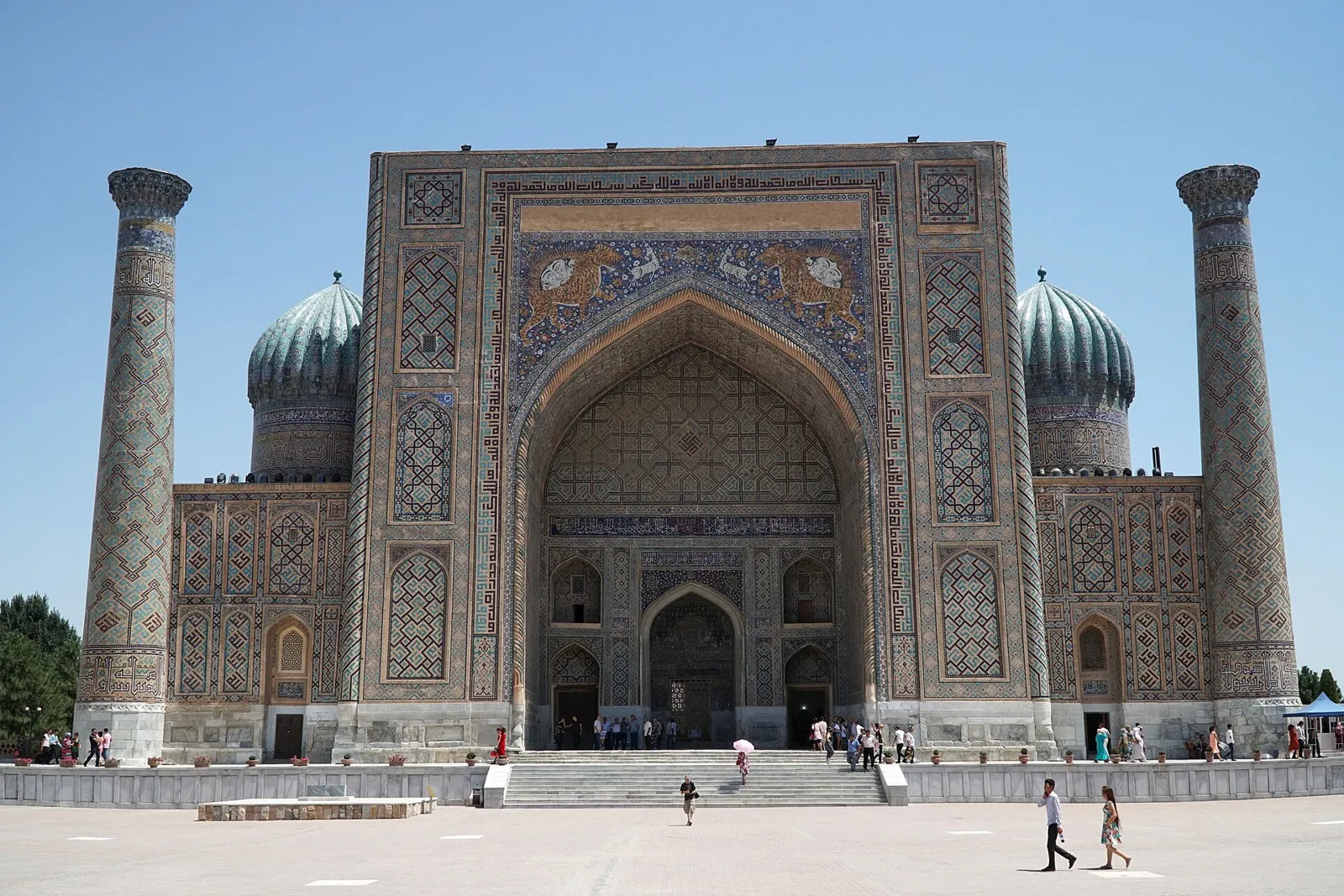

Samarkand
Samarkand is one of the Silk Road's best-known cities and was the capital of Timur, famed for monuments covered in cobalt and turquoise tilework. It rewards anyone curious about Central Asian history and the Turkic world with some of Uzbekistan's most memorable architecture.
Why visit
Samarkand is among the oldest continuously inhabited cities in Central Asia, with a history reaching back roughly 2,500 years. It was the heart of Sogdian civilisation, was taken by Alexander the Great in 329 BC, and remained a key crossroads of the Silk Road for centuries. From the late 10th century it was ruled by Turkic or Turko-Mongol dynasties.
In the 14th century Timur made it his capital, and it became a centre of learning and art under the Timurids. Most of the landmarks you will see today date from the Timurid era and the later Bukhara-based Uzbek period. UNESCO listed the city in 2001 as Samarkand – Crossroads of Cultures.
How many days
Two full days is enough for most visitors to see the main monuments. A third day lets you slow down, explore the bazaars and add a day trip.
On a wider Uzbekistan route with Bukhara or Tashkent, two nights in Samarkand is common. Staying overnight is worthwhile if you want to see the Registan both by day and in the evening light.
Top sights
The Registan is the city's emblem, a square framed by madrasas that took their present form largely under the Bukhara period. Gur-e Amir is the mausoleum where Timur and members of his family are buried. Shah-i-Zinda is a necropolis of tombs lined up along a narrow lane, known for its tilework, and the Bibi-Khanym Mosque reflects the huge scale of Timurid building.
Add the Ulugh Beg Observatory, a good stop for understanding the astronomy pursued by Timur's grandson. Entry rules and hours can change, so check before you go.
Where to stay (neighbourhoods)
The old city around the Registan and Gur-e Amir is the most practical base if you want to walk to the monuments. Small guesthouses and family-run courtyard stays are concentrated here, and the atmosphere is more traditional.
The new city, developed in the Russian imperial and Soviet periods, has wider avenues, larger hotels and administrative buildings. It is a little farther from the sights but easy to get around. Book ahead in busy seasons.
Getting there and around
Samarkand lies about 275 km southwest of Tashkent and is on Uzbekistan's railway network. High-speed trains link it with Tashkent, Bukhara and other cities; check timetables and ticket conditions before you go. The city also has an airport with some flights.
The main monuments are relatively close together in the old city and can be explored on foot. For farther spots, taxis or ride-hailing apps are convenient; agree the fare before you get in if there is no meter.
What to eat
Classic dishes include plov, samsa, grilled skewers and soups. Samarkand bread, a round, stamped tandoor loaf, is a local signature; look for it fresh at the markets.
The bazaars are a good place to see dried fruit, nuts and sweets up close. Sitting in a tea house with green tea is also part of everyday local habit.
Best time to visit
Spring (April–May) and autumn (September–October) are the most comfortable seasons for walking. Summers can be hot, so visit monuments early in the morning or late in the afternoon.
Winters can be cold; crowds are smaller but days are short. Check the forecast before you travel.
Day trips
Afrasiyab, the site of the ancient settlement, can be visited together with its museum to get a sense of Samarkand's early history. Villages and countryside around the city offer a different pace from the centre.
For farther destinations such as Bukhara, research transport options in advance; some may be better as a separate stay than a day trip.
Map
Places to see
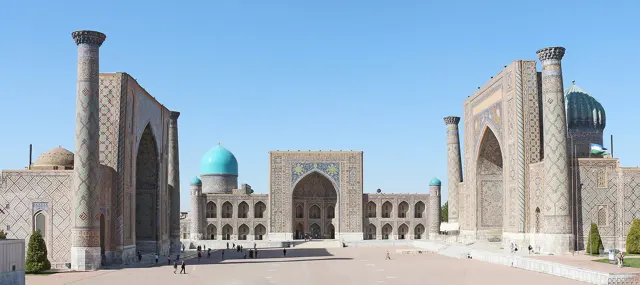 RegistanIn the heart of Samarkand, three grand madrasas with turquoise domes and richly tiled façades face a historic square. Registan is one of the finest ensembles of Islamic architecture in Central Asia, with centuries of Timurid and later history written into its walls.
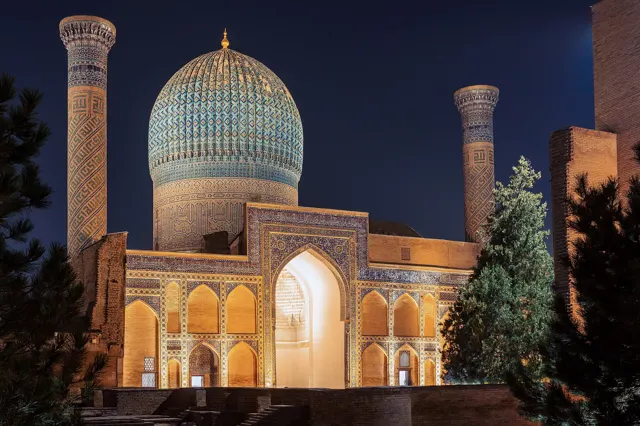 Gur-e AmirGur-e Amir in Samarkand is the mausoleum of Timur and several members of his dynasty, recognisable by its ribbed turquoise-blue dome. It is a compact visit that shows the roots of the architecture later seen in the Mughal tombs of India.
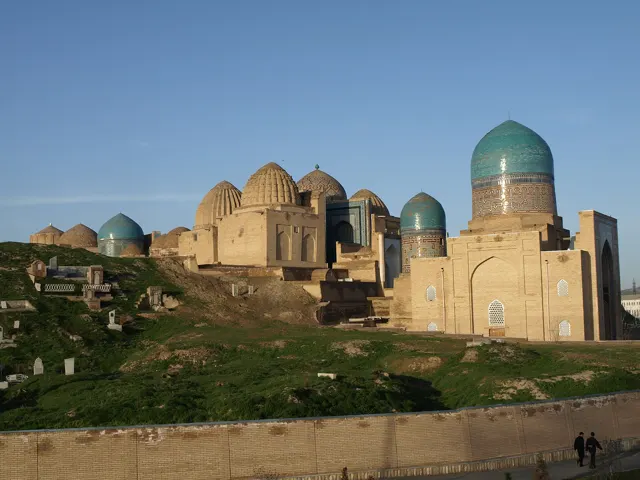 Shah-i-ZindaTucked into the north-east of Samarkand, Shah-i-Zinda is a narrow street of mausoleums lined with turquoise and deep-blue tilework, climbing up a stairway through centuries of Central Asian architecture. It is a place of living pilgrimage and a rare chance to see Timurid-era tomb art up close.
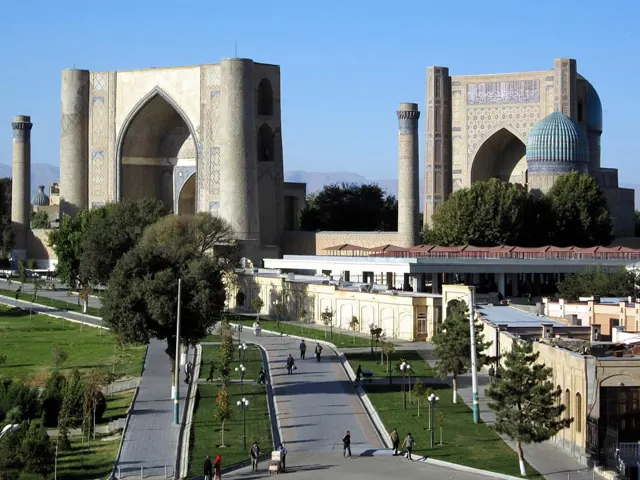 Bibi-Khanym MosqueRising above central Samarkand, the Bibi-Khanym Mosque is one of Timur's most ambitious projects, a vast courtyard mosque brought back from ruin. It is a rewarding stop for anyone who wants to see the scale of Timurid architecture up close.
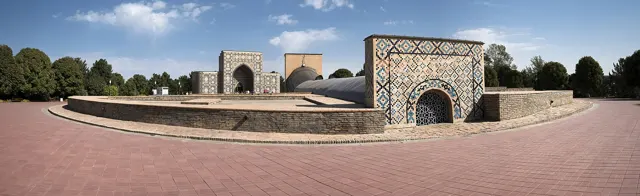 Ulugh Beg ObservatoryOn Kuhak hill in Samarkand lie the remains of one of the most advanced astronomical observatories of the 15th century. Standing by the huge underground arc once used to measure the sky, you can see how seriously the Timurid court took science.
Latest news
- Uzbekistan and World Bank discuss attracting investment
- Uzbekistan and IFC discuss transport and energy projects
- Uzbekistan to Create Full Cost Coverage System for Childhood Cancer Treatment
- Uzbekistan and EBRD discuss privatization and support for business
- Uzbekistan and Malaysia agree to train semiconductor workforce
- Mirziyoyev Discusses New Power Plants and Fuel Supplies With Foreign Investors