
 Azerbaijan
 Kazakhstan
 Kyrgyzstan
 Turkmenistan
 Northern Cyprus
 Türkiye
 Tatarstan
 Bashkortostan
 Sakha (Yakutia)
 Gagauzia
 North Macedonia
 Bulgaria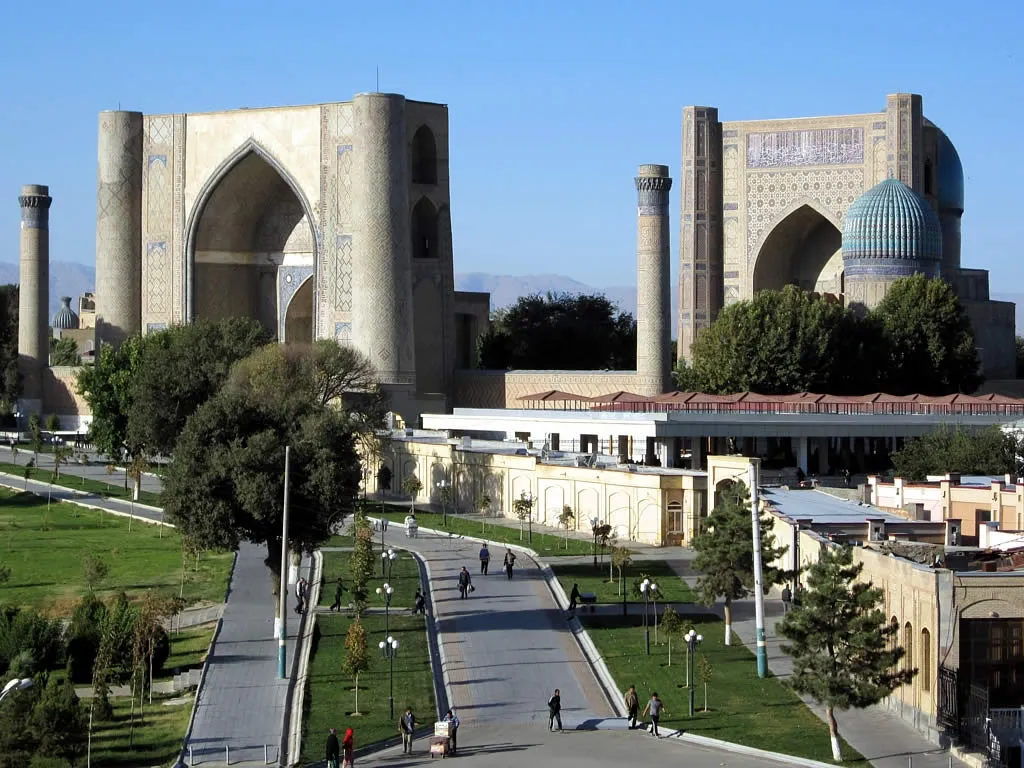

Bibi-Khanym Mosque
Rising above central Samarkand, the Bibi-Khanym Mosque is one of Timur's most ambitious projects, a vast courtyard mosque brought back from ruin. It is a rewarding stop for anyone who wants to see the scale of Timurid architecture up close.
History
The Bibi-Khanym Mosque is tied to Timur's Indian campaign of 1399, after which he decided to build a gigantic congregational mosque in his new capital, Samarkand. Construction ran roughly from 1399 to 1405, and craftsmen are reported to have come from many regions. When Timur returned from campaign in 1404 the mosque was nearly finished, but he was unhappy with progress and ordered changes, especially to the main dome.
The building was rushed and extremely ambitious, and structural problems appeared early. Within a few years bricks began to fall from the great dome over the mihrab. The mosque is named for Timur's wife, Saray Mulk Khanum, who is said to have commissioned it herself. Restoration work was cancelled in the late 16th century, and the building slowly decayed; the inner arch of the portal collapsed in an earthquake in 1897, and the ruins were stripped for building materials over the centuries.
Some stabilisation began in the Soviet period, and from 1974 a comprehensive reconstruction followed, continuing after independence. A new project to complete the restoration has also been announced in recent years, so check what is currently under way before you go.
What to see
The mosque follows the classic four-iwan courtyard plan. Its outer walls enclose a large rectangle, and you enter through a tall portal on the northeast side. Opposite stands the main dome, around 40 metres high, with two smaller domed buildings facing each other across the sides of the courtyard. The domes use a double-shell design, with the outer and inner shells shaped independently, giving a dramatic exterior and a better-proportioned interior.
In the middle of the courtyard sits a huge Quran stand carved from marble blocks, dating from Timur's time. The courtyard was once surrounded by galleries carried on more than 400 marble columns; only traces remain today. The four corner minarets have been restored, while the larger minarets planned beside the entrance portal and the main sanctuary remain unfinished.
Nearby, an octagonal corner mausoleum survives from Saray Mulk Khanum's madrasa, known for its tilework and painted decoration.
Visiting tips
The mosque is a short distance from other major Samarkand sights, including the Registan, Shah-i-Zinda and Gur-e Amir, so it fits easily into a day of sightseeing. It operates as a branch of the Samarkand state museum-reserve. Check entry arrangements, opening times and any areas closed for restoration before you go.
The site is large and open, so morning or late-afternoon light is kinder for photos and for the heat. In summer, bring water and a hat. Because restoration is ongoing, you may see scaffolding or work areas. As this is a religious monument, modest clothing is appropriate.
Map
Places to see
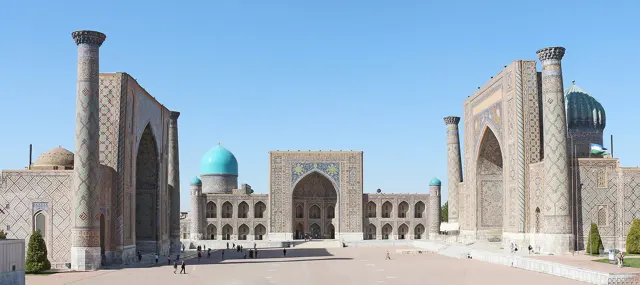 RegistanIn the heart of Samarkand, three grand madrasas with turquoise domes and richly tiled façades face a historic square. Registan is one of the finest ensembles of Islamic architecture in Central Asia, with centuries of Timurid and later history written into its walls.
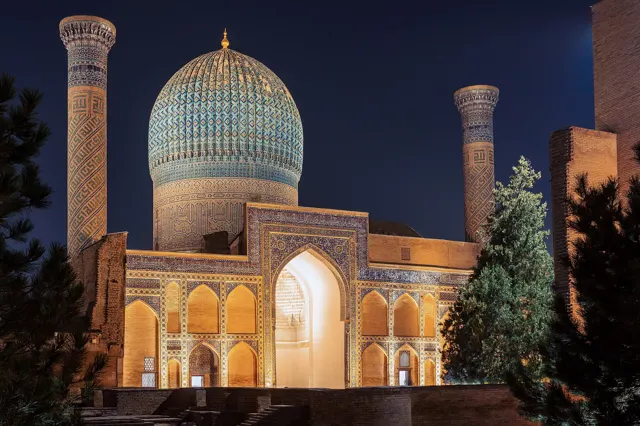 Gur-e AmirGur-e Amir in Samarkand is the mausoleum of Timur and several members of his dynasty, recognisable by its ribbed turquoise-blue dome. It is a compact visit that shows the roots of the architecture later seen in the Mughal tombs of India.
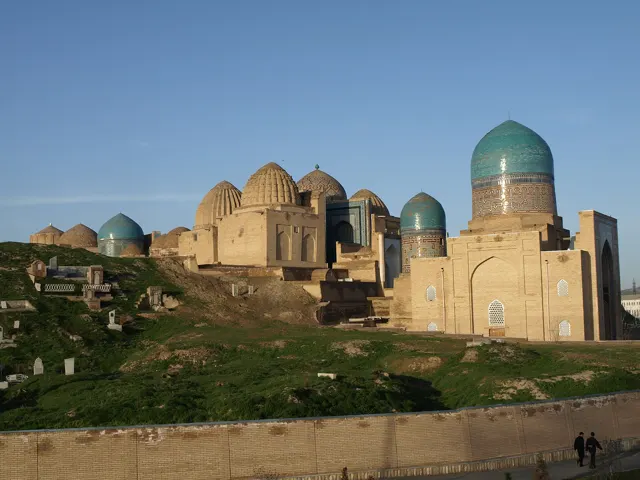 Shah-i-ZindaTucked into the north-east of Samarkand, Shah-i-Zinda is a narrow street of mausoleums lined with turquoise and deep-blue tilework, climbing up a stairway through centuries of Central Asian architecture. It is a place of living pilgrimage and a rare chance to see Timurid-era tomb art up close.
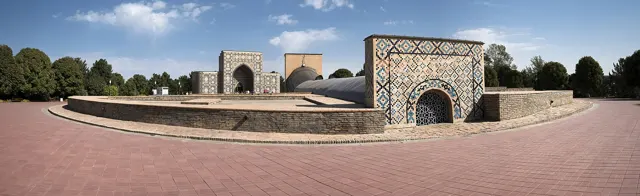 Ulugh Beg ObservatoryOn Kuhak hill in Samarkand lie the remains of one of the most advanced astronomical observatories of the 15th century. Standing by the huge underground arc once used to measure the sky, you can see how seriously the Timurid court took science.
Latest news
- Uzbekistan and World Bank discuss attracting investment
- Uzbekistan and IFC discuss transport and energy projects
- Uzbekistan to Create Full Cost Coverage System for Childhood Cancer Treatment
- Uzbekistan and EBRD discuss privatization and support for business
- Uzbekistan and Malaysia agree to train semiconductor workforce
- Mirziyoyev Discusses New Power Plants and Fuel Supplies With Foreign Investors